

Loading...
Loading...
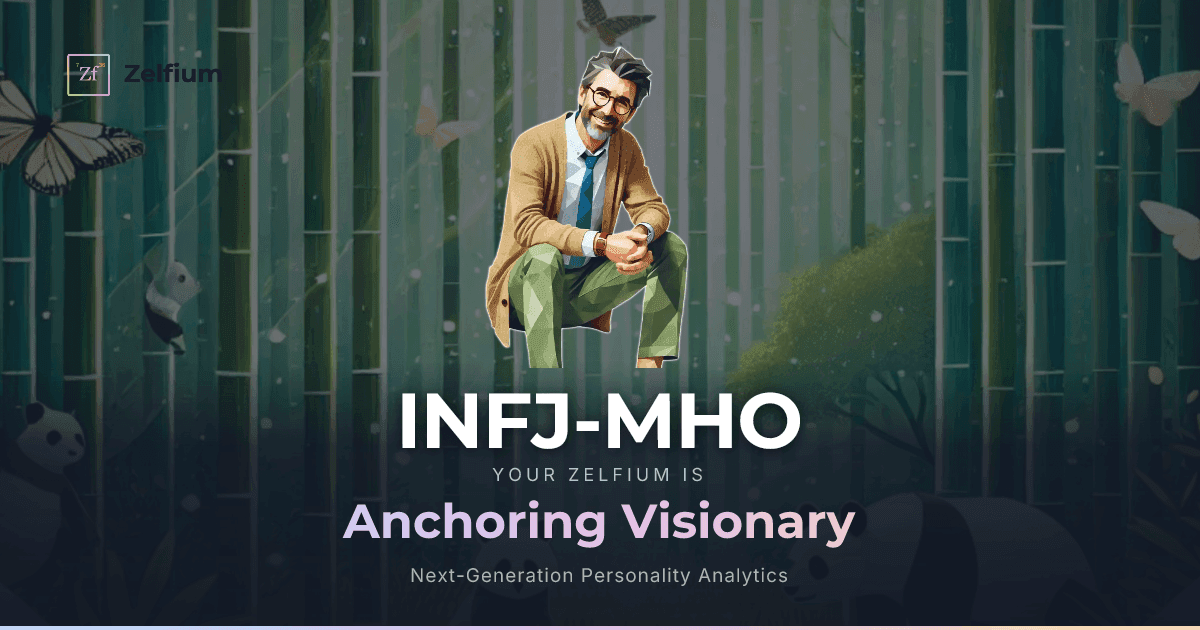
The Anchoring Visionary
Some people hold the world together not by force but by faith — a quiet, unshakable belief that what has been built is worth sustaining, that the people in their lives are worth believing in, and that difficulty is temporary when the foundations are sound. The INFJ-MHO is this person. When the INFJ's visionary moral depth meets the MHO's stabilizing warmth, what emerges is a counselor whose guidance feels less like advice and more like solid ground. The INFJ sees beneath surfaces to the hidden architecture of human experience — the patterns, the pain, the untapped possibility. The MHO wraps that perception in a steadiness that never wavers. Maintaining provides the patience to stay with people through slow, unglamorous growth. Harmony ensures that the connection is genuine rather than transactional. And optimism gives the whole enterprise an undertow of hope that others find themselves carried by before they realize it is there. The result is someone who does not merely understand what others are going through but becomes the still point around which they orient themselves — an anchor in both calm waters and storms.
The INFJ's introversion, openness, feeling, and judging create a mind of unusual depth and moral seriousness. The MHO's maintaining, harmony, and optimism create an inner world of warmth, continuity, and unshakable confidence. When these layers merge, the visionary gains an anchor — and the anchor gains a vision.
The MHO's maintaining dimension fundamentally reshapes the INFJ's relationship with patience. The pure INFJ can become frustrated by the gap between what is perceived as possible and what currently exists. The maintaining dimension introduces a deep respect for gradual processes — for the trust that compounds over years, for the growth that happens in millimeters rather than leaps. The INFJ-MHO understands that some transformations cannot be accelerated and that the willingness to remain present through the slow seasons is itself a form of healing.
The MHO's optimism interacts with the INFJ's feeling dimension in a way that is profoundly stabilizing. The INFJ's values can sometimes become a source of anguish — the world so rarely lives up to what is believed to be right. The MHO's optimism does not dismiss this anguish but provides a counterweight: the trust that goodness is durable, that setbacks are temporary, and that the work of living according to values will eventually produce something worthwhile. This is not toxic positivity — it is the deep, seasoned confidence of someone who has seen enough to know that hope is realistic.
The MHO's harmony doubles down on the INFJ's already powerful empathy, but with a distinctive quality: sustainability. The INFJ's empathy can be overwhelming — feeling others' pain as if it were one's own eventually depletes the person who cannot stop absorbing. The MHO's harmony carries warmth without the same degree of porosity, and the optimistic dimension provides emotional buoyancy that helps the INFJ-MHO surface from deep empathic immersion without drowning. The result is a counselor who can sustain presence over years in a way that more volatile combinations cannot.
The INFJ-MHO possesses a capacity for sustained relational investment that is genuinely extraordinary. The INFJ's vision provides direction — knowing what someone needs to hear, what they are ready for, what remains too soon. The MHO's consistency ensures this wisdom is not offered once and then abandoned but delivered repeatedly, in slightly different forms, for as long as it takes. People in the orbit of this type often describe a sensation of being held — not physically but existentially, as if someone has committed to their well-being in a way that does not waver regardless of circumstances.
There is also a remarkable gift for normalizing difficulty. The INFJ sees the depth of what someone is experiencing. The MHO's optimism frames that experience within a larger narrative of resilience and continuity. Together, they produce counsel that validates pain without catastrophizing it — that says, in effect, "This is hard, and it is real, and it will not destroy what has been built." For people in crisis, this combination of acknowledgment and assurance is exactly what makes recovery possible.
The MHO's maintaining dimension gives the INFJ's insights an operational longevity they would not otherwise have. Where the pure INFJ might deliver a transformative insight and then move on to the next person or cause, the INFJ-MHO stays to see the insight implemented, refined, and integrated into the daily life of the person it was meant to serve.
The primary tension in the INFJ-MHO is between the INFJ's awareness of complexity and the MHO's instinct to smooth things over. The INFJ perceives layers of difficulty — moral ambiguity, unresolved grief, patterns that resist easy resolution. The MHO's optimism and harmony gently push toward reassurance, toward finding the silver lining, toward restoring equilibrium. When these impulses conflict, the INFJ-MHO can experience a tug-of-war between the part that knows a difficult truth must be spoken and the part that wants to preserve the relationship's comfort. The risk is that hard conversations are deferred indefinitely — not out of cowardice but out of a genuine tension between honesty and care.
A second tension exists between the INFJ's desire for transformation and the MHO's love of what already exists. The INFJ sees what could be different, what could be better, what could change. The MHO values the beauty of what is — the life already built, the relationships already established, the routines already functioning. The INFJ-MHO can become internally divided between the call to grow and the call to preserve, particularly when growth requires disrupting something the maintaining dimension has come to love.
There is also the quiet tension of self-deferral. The MHO's orientation toward others' well-being, amplified by the INFJ's moral commitment to service, can create a pattern where personal needs are perpetually postponed. The optimism whispers "My turn will come," the maintaining dimension assures "Things are fine as they are," and the feeling dimension insists "Their need is greater than mine." The result can be a life of sustained giving in which the giver's own desires are never quite reached.
Growth for the INFJ-MHO is not about abandoning steadiness or dimming hope. It is about expanding the circle of care to include the self as a legitimate recipient. The same patience extended to others' slow growth can be turned inward. The same optimism that believes others will find their way can be applied to personal longings that have been deferred. And the same honesty that the INFJ brings to others' lives — the willingness to name what is true even when it is uncomfortable — can be directed at the relationship with the self. The INFJ-MHO who learns to anchor their own needs with the same devotion they bring to everyone else's discovers not selfishness but completion — the recognition that an anchor that neglects its own foundation cannot hold anything for long.
The INFJ-MHO portrait drawn here is the "pure form" — what emerges when every pole swings fully in this direction. In reality, each of your dimensions carries a different intensity, and at every intersection, a unique chemistry unfolds. Even a slight tilt in one dimension creates an entirely different internal dynamic — that is the resolution of Zelfium's 7-dimension model.
Zelfium measures each of 36 facets on a 6-point scale. The number of possible patterns:
6³⁶
possible patterns
vs all humans ever born
880 trillion ×
~117 billion humans have ever lived — repeat that 880 trillion times and you still can't fill every pattern
vs stars in the observable universe
~50,000 ×
~200 sextillion stars in the observable universe — still not enough
vs grains of sand on Earth
~1 billion ×
~7.5 quintillion grains of sand — multiply by a billion
vs current world population
~1.3 quintillion ×
Line up 1.3 quintillion copies of today's 8 billion people to fill every type
More than 50,000 times the number of every star in the observable universe. That is the resolution of your personality.
So don't fit yourself into this description too tightly. INFJ-MHO is a compass showing the direction your personality leans — not a box that defines everything you are. The pattern woven by your 36 facets is singular in this universe. To discover that one-of-a-kind blend — to find your own INFJ-MHO — take the assessment.