

Loading...
Loading...
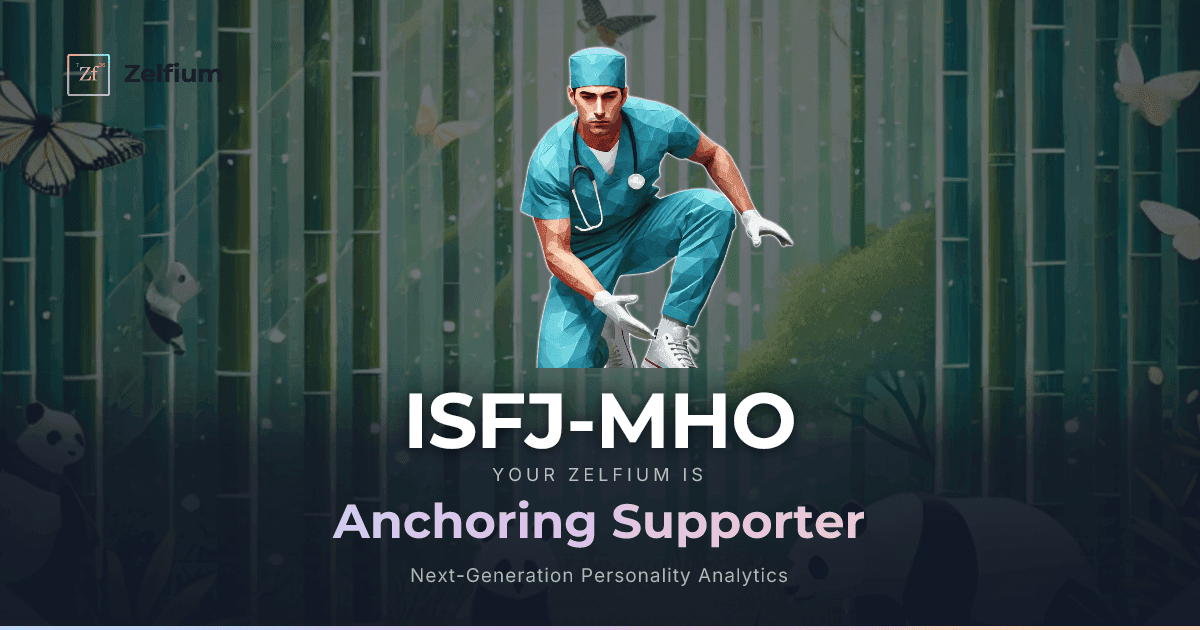
The Anchoring Supporter
Some combinations amplify each other into something almost mythic in its steadiness. The ISFJ-MHO is such a combination. The ISFJ's quiet, detail-driven devotion — the person who builds safety through remembered preferences, kept promises, and a presence that never wavers — meets the MHO's anchoring stability, where maintaining, harmony, and optimism converge into a warmth so reliable it becomes the emotional infrastructure that entire groups depend on without quite knowing it. Where more volatile types contribute through intensity and insight, the ISFJ-MHO contributes through something rarer and less celebrated: endurance with grace. This type sustains the human fabric of families, teams, and communities over years and decades, not through dramatic intervention but through the accumulation of ten thousand small acts of faithfulness that, taken together, constitute something close to an unshakable foundation. The optimism of the MHO lifts the ISFJ's care from duty into joy, while the ISFJ's sensory precision prevents the MHO's warmth from becoming vague. The result is a presence that is both deeply comforting and genuinely competent — an anchor that holds not because it is heavy but because it is embedded in something real.
The ISFJ and MHO share a fundamental orientation toward people and stability, which means the meeting of these two layers is less a collision and more a deepening. The ISFJ's introversion provides the quiet processing space where care is refined; the MHO's maintaining dimension ensures that the care, once offered, does not waver or expire. Together, they create a person whose reliability is not a discipline imposed from outside but a natural expression of who they are.
The interplay between the ISFJ's feeling dimension and the MHO's harmonious nature produces a doubled empathic capacity. The ISFJ feels with specific, personal intensity — registering individual suffering, individual joy, individual need. The MHO's harmony extends that sensitivity outward, creating an awareness of relational atmospheres and group dynamics that allows the ISFJ-MHO to tend not just individual people but the spaces between them. When a team feels inexplicably cohesive or a family gathering carries an unusual warmth, the ISFJ-MHO is often the reason — quietly adjusting, accommodating, bridging gaps before they become distances.
The most transformative element in this combination is the MHO's optimism interacting with the ISFJ's judging dimension. The ISFJ's conscientiousness can become heavy — the weight of obligations, the pressure of internal standards, the sense that enough is never quite enough. The MHO's optimism does not remove these responsibilities; it changes the experience of carrying them. Duty remains, but it is accompanied by a genuine faith that the effort matters, that the care being offered is landing, that the world being maintained is fundamentally sound. This infusion of trust into the ISFJ's work ethic is what gives the ISFJ-MHO's presence its distinctive quality: the sense of being cared for by someone who is not burdened by the caring.
The ISFJ-MHO's greatest strength is the ability to create emotional safety over the long term without the caretaker appearing to strain under the weight of it. This type absorbs difficulty, processes it internally with the ISFJ's reflective depth, and returns to the world with the MHO's warm composure intact. People around the ISFJ-MHO feel a stability that is difficult to articulate — not the absence of problems but the presence of someone who will not be destabilized by them.
The combination of the ISFJ's sensory memory and the MHO's maintaining dimension creates an extraordinary continuity of care. This type remembers not just what someone said but how they said it, not just what happened but what it meant — and maintains that thread of attention across years. The friend who calls the ISFJ-MHO after a decade apart finds that nothing has been forgotten and nothing has been diminished. That kind of enduring attention is a form of love that many people experience only once in a lifetime, if at all.
The MHO's optimism, grounded by the ISFJ's practical sensibility, produces an encouragement that is believable precisely because it is specific. This type does not say "Everything will be fine" in a generic way. The reassurance is rooted in observed evidence, in remembered strengths, in concrete reasons for hope — and it lands with a weight that abstract positivity never achieves.
The primary risk in the ISFJ-MHO is the creation of a comfort zone so natural and so appealing that necessary growth gets indefinitely postponed. Both layers value stability; the MHO's optimism adds a reassuring conviction that the current state of affairs is fundamentally okay. When change is genuinely needed — in a relationship that has stagnated, in a routine that has outlived its purpose, in a role that has become confining — the ISFJ-MHO may find it extraordinarily difficult to disrupt what feels so secure. The inner narrative whispers that things are fine as they are, and the whisper is so gentle that it can be mistaken for wisdom rather than avoidance.
A second tension emerges from the doubled empathic capacity. With both the ISFJ's feeling and the MHO's harmony operating simultaneously, the ISFJ-MHO absorbs an enormous amount of emotional content from the surrounding environment. The optimistic dimension ensures this absorption does not produce visible distress — the composure holds — but the internal accumulation is real. The person who appears most serene may be carrying the most weight, and the inability to show strain can paradoxically make it harder for others to offer the support this type needs.
The tendency to smooth over conflict — avoiding the difficult conversation because harmony feels more important than honesty — is a persistent risk. The ISFJ's desire to avoid upsetting people combines with the MHO's instinct to maintain relational peace, creating a pattern where legitimate grievances are swallowed and legitimate needs go unspoken. Over time, this produces not harmony but its counterfeit: a surface calm beneath which unaddressed tensions slowly build pressure.
Growth for the ISFJ-MHO means learning that true stability includes the capacity for honest disruption. A foundation that cannot absorb a tremor is not strong — it is brittle. The relationships this type has built with such patient care are strong enough to hold a difficult conversation, a moment of genuine conflict, an honest expression of need. The optimism that trusts in others' resilience must also trust in the resilience of the bonds themselves — believing that they can be stretched by honesty without breaking. The ISFJ-MHO who learns to speak as faithfully as they listen, to ask as readily as they give, and to trust their own needs as valid anchoring points rather than inconvenient disruptions, discovers that the anchor becomes not just more secure but more alive — holding everything in place while finally including itself in the circle of things held.
The ISFJ-MHO portrait drawn here is the "pure form" — what emerges when every pole swings fully in this direction. In reality, each of your dimensions carries a different intensity, and at every intersection, a unique chemistry unfolds. Even a slight tilt in one dimension creates an entirely different internal dynamic — that is the resolution of Zelfium's 7-dimension model.
Zelfium measures each of 36 facets on a 6-point scale. The number of possible patterns:
6³⁶
possible patterns
vs all humans ever born
880 trillion ×
~117 billion humans have ever lived — repeat that 880 trillion times and you still can't fill every pattern
vs stars in the observable universe
~50,000 ×
~200 sextillion stars in the observable universe — still not enough
vs grains of sand on Earth
~1 billion ×
~7.5 quintillion grains of sand — multiply by a billion
vs current world population
~1.3 quintillion ×
Line up 1.3 quintillion copies of today's 8 billion people to fill every type
More than 50,000 times the number of every star in the observable universe. That is the resolution of your personality.
So don't fit yourself into this description too tightly. ISFJ-MHO is a compass showing the direction your personality leans — not a box that defines everything you are. The pattern woven by your 36 facets is singular in this universe. To discover that one-of-a-kind blend — to find your own ISFJ-MHO — take the assessment.