

Loading...
Loading...
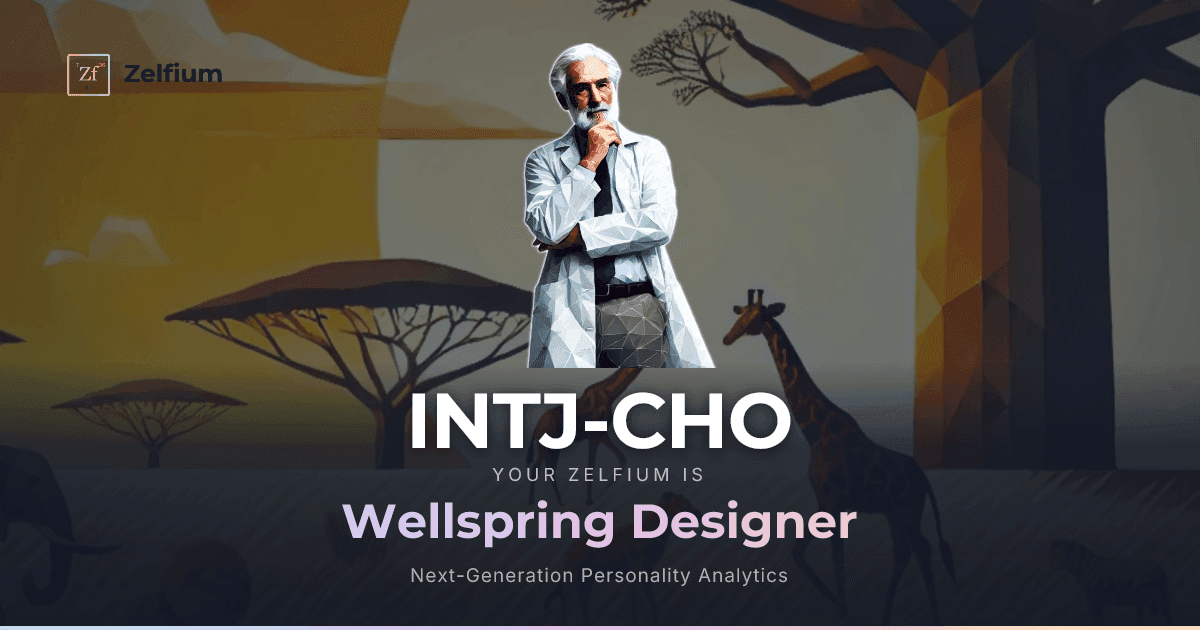
The Wellspring Designer
The INTJ-CHO is what happens when a mind built for solitary strategic mastery discovers that its deepest satisfaction comes from bringing others along for the journey. The INTJ's architectural intelligence — the capacity to see the future as a blueprint and then build toward it with relentless discipline — meets the CHO's wellspring nature, where curiosity, warmth, and emotional buoyancy fuse into a generous, inexhaustible energy that others instinctively draw from. The result is a visionary who does not merely design the future but invites people into it, a strategist whose plans carry an unusual quality of hope. Where a pure INTJ might build in magnificent isolation, the INTJ-CHO finds that isolation feels incomplete. The wellspring needs to flow somewhere, and the architecture needs inhabitants. This combination produces someone whose strategic brilliance is matched by a genuine desire to share its fruits — not out of obligation, but from a deep conviction that a vision realized alone is only half realized.
The INTJ's introversion provides the deep internal workspace where strategies are born, and the CHO's curiosity ensures that workspace never grows stale. Both dimensions pull toward exploration, but in complementary ways: the INTJ's openness reaches toward abstract systems and long-range possibilities, while the CHO's curiosity adds a warmly human direction — wanting to understand not just how the world could be redesigned but who would benefit from the redesign and how to bring them aboard. The two curiosities interlock, producing a strategist whose visions are simultaneously ambitious and people-aware.
The most generative interaction in this combination is between the INTJ's thinking dimension and the CHO's harmonious nature. Thinking demands logical rigor, structural analysis, and a willingness to make hard calls. Harmony insists that those hard calls be made with awareness of their human impact — not by overriding logic, but by expanding the definition of what counts as a good outcome. In the INTJ-CHO, this creates a decision-making process that is both tough-minded and tender-hearted: the analysis is rigorous, but the variables include how people will feel, whether trust will be preserved, and whether the path forward leaves room for everyone who deserves to walk it.
The CHO's optimism interacts powerfully with the INTJ's judging dimension. Judging provides the drive to execute, to set timelines, to push through obstacles. Optimism provides the emotional fuel that keeps the engine running even when the plan encounters resistance. Where a pure INTJ might respond to setbacks with frustration or rigidity, the CHO's optimism reframes them as data points in a story that will ultimately resolve well. This gives the INTJ-CHO an unusual resilience — the ability to hold a long-term vision steady through turbulence, not because the turbulence is ignored but because it is genuinely trusted to pass.
The introversion-harmony tension is worth noting. The INTJ needs substantial time alone to think at full capacity, while the CHO's harmonious dimension draws energy from human connection and feels incomplete without it. The INTJ-CHO lives in a rhythm of withdrawal and engagement that, when well managed, enriches both modes: solitary planning becomes more purposeful because there are people waiting for the results, and social engagement becomes more substantive because the INTJ-CHO always arrives with something worth sharing.
The INTJ-CHO possesses an extraordinary ability to sustain both vision and morale over the long haul. This is the person who can see a ten-year trajectory that others cannot imagine, design the steps to get there, and then communicate the journey in terms that make people want to follow. The INTJ's strategic authority is warmed by the CHO's emotional generosity, creating a leadership presence that is both intellectually commanding and personally reassuring.
There is also a distinctive capacity for resilient optimism grounded in competence. The INTJ-CHO does not simply hope things will work out — the confidence is rooted in having actually designed the plan, stress-tested the logic, and prepared contingencies. When this type says "it will be fine," the reassurance carries the weight of genuine strategic preparation. This combination of warmth and substance makes the INTJ-CHO exceptionally effective at building teams, sustaining collaborations, and leading through uncertainty.
Finally, the CHO's wellspring quality ensures that the INTJ's considerable intellectual output flows outward rather than remaining locked in private contemplation. Ideas are shared generously, credit is distributed naturally, and the satisfaction of a completed strategy includes the satisfaction of seeing others grow alongside it.
The primary tension in the INTJ-CHO is between depth and breadth of engagement. The INTJ's introversion and thinking dimensions demand focused, solitary work — the kind of deep strategic thinking that cannot happen in a crowd. The CHO's harmony and curiosity dimensions pull toward connection, collaboration, and the generous sharing of ideas. The INTJ-CHO can find itself stretched between the need to disappear into the blueprint and the desire to be present with the people the blueprint is for, and neither need diminishes simply because the other is being served.
A second tension lives between optimism and the INTJ's clear-eyed realism. The thinking dimension sees the world as it is, including its flaws and failure points. Optimism trusts that these difficulties will resolve. Most of the time, this creates a productive partnership — realistic assessment paired with forward momentum. But occasionally, optimism can soften the INTJ's analytical edge, making problems seem more manageable than they actually are, or delaying hard conversations because the CHO's harmony dimension would prefer not to disrupt the relational peace. Learning when to let the strategist override the optimist — when to name the problem clearly even if it is uncomfortable — is an ongoing calibration.
There is also a tension around self-care. The CHO's generosity and the INTJ's high standards can combine to create a person who pours energy into both strategic work and human connection without adequately replenishing either reservoir. The INTJ-CHO who learns to treat rest and solitude not as inefficiency but as infrastructure discovers that both the architecture and the wellspring become stronger for it.
Growth for the INTJ-CHO is about learning to trust the rhythm rather than fight it. There will be seasons for deep solitary design and seasons for generous engagement with others. There will be moments when the strategist must speak uncomfortable truths and moments when the wellspring must simply hold space. The temptation is to optimize these modes into a seamless system, but the reality is that the transitions between them are sometimes messy, and that is acceptable. The INTJ-CHO who learns to move between vision and warmth with grace — who can be alone with a blueprint one hour and fully present with a colleague the next — discovers that the combination of architectural precision and human generosity is not just powerful. It is the kind of presence that people remember long after the strategy itself has been executed and surpassed.
The INTJ-CHO portrait drawn here is the "pure form" — what emerges when every pole swings fully in this direction. In reality, each of your dimensions carries a different intensity, and at every intersection, a unique chemistry unfolds. Even a slight tilt in one dimension creates an entirely different internal dynamic — that is the resolution of Zelfium's 7-dimension model.
Zelfium measures each of 36 facets on a 6-point scale. The number of possible patterns:
6³⁶
possible patterns
vs all humans ever born
880 trillion ×
~117 billion humans have ever lived — repeat that 880 trillion times and you still can't fill every pattern
vs stars in the observable universe
~50,000 ×
~200 sextillion stars in the observable universe — still not enough
vs grains of sand on Earth
~1 billion ×
~7.5 quintillion grains of sand — multiply by a billion
vs current world population
~1.3 quintillion ×
Line up 1.3 quintillion copies of today's 8 billion people to fill every type
More than 50,000 times the number of every star in the observable universe. That is the resolution of your personality.
So don't fit yourself into this description too tightly. INTJ-CHO is a compass showing the direction your personality leans — not a box that defines everything you are. The pattern woven by your 36 facets is singular in this universe. To discover that one-of-a-kind blend — to find your own INTJ-CHO — take the assessment.