Loading...
Loading...
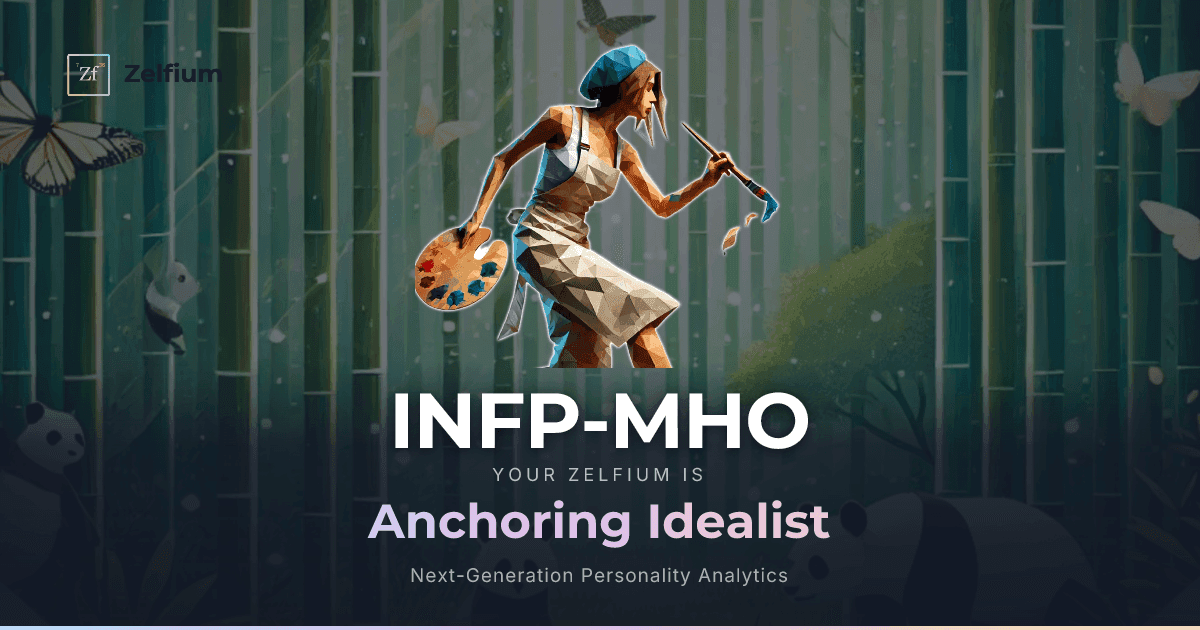
The Anchoring Idealist
Some people dream of distant horizons. The INFP-MHO dreams of making the ground beneath everyone's feet a little warmer. This is what emerges when the INFP's interior world — rich with values, imagination, and a longing for what is genuinely true — meets the MHO's anchor nature, where a devotion to continuity, a heart wired for connection, and an optimistic steadiness converge into a presence that makes others feel the world is fundamentally safe. The result is a dreamer whose vision is not directed toward revolution but toward deepening — toward making the relationships and communities that already exist more honest, more beautiful, and more enduring. Where other INFPs may feel the restless pull of possibility, the INFP-MHO feels the quiet pull of presence: the conviction that the most meaningful thing is not always what might be created next but what has already been created and must be lovingly sustained. The dream is not less ambitious for being rooted. It is ambitious in a different direction — downward, into the soil of what is real.
The INFP's four dimensions — introversion, openness, feeling, and pioneering — create someone whose deepest life unfolds in a private theater of values and vision. The MHO's three dimensions — maintaining, harmony, and optimism — create an inner world oriented toward preservation, relational warmth, and an unshakable confidence that things will ultimately be fine. When these layers merge, the dreamer acquires roots.
The interaction between the INFP's openness and the MHO's maintaining dimension produces a distinctive creative sensibility. Openness reaches toward the new, the possible, the not-yet-imagined. Maintaining holds fast to what has already been proven valuable. In the INFP-MHO, these forces do not pull apart — they interweave. The imagination is used not only to envision new worlds but to see the hidden beauty in familiar ones. The morning routine is not mere habit; it is a meditation. A long friendship is not taken for granted; it is experienced as an ongoing work of emotional artistry. This type finds depth where others see only repetition.
The most distinctive interaction, however, is between feeling and the MHO's optimism. The INFP's feeling dimension registers injustice, dishonesty, and the suffering that comes from values betrayed — and it feels these things with an intensity that can become debilitating. The MHO's optimism does not deny any of this. Instead, it provides a floor beneath the pain — a quiet certainty that, despite everything, the fundamental goodness of people and relationships will endure. This is not shallow cheerfulness. It is a deep-rooted faith that allows the INFP-MHO to feel the full weight of the world's imperfection without being crushed by it. The dreamer who carries an anchor is not one who cannot swim. They are one who knows where to stand.
The interaction between pioneering and maintaining creates a productive tension unique to this combination. The INFP's pioneering dimension resists closure, craves flexibility, and wants to follow inspiration freely. The MHO's maintaining dimension values consistency, commitment, and the slow accumulation of depth. The INFP-MHO lives in the space between these two forces — not paralyzed, but thoughtful. Change is neither feared nor fetishized. It is evaluated, gently, by asking: does this deepen what matters, or does it only scatter attention?
The INFP-MHO possesses a rare gift for making people feel that they belong. This is not the performance of warmth but its substance — the genuine ability to see what is good in others and to reflect it back with consistency and patience. The INFP's emotional depth ensures that the seeing is accurate and the MHO's maintaining dimension ensures it is sustained over time. People around this type develop a particular kind of trust: the confidence that they will be valued today in the same way they were valued last year, and that nothing performative is being offered.
There is also an unusual capacity to hold space for difficulty without being destabilized by it. The INFP feels deeply; the MHO's optimism absorbs the aftershock. When someone brings their pain to the INFP-MHO, they receive not just empathy but the unspoken message that this pain will not break the relationship, will not overwhelm the listener, and will not be the end of the story. This capacity to sit with suffering while radiating quiet confidence that it is survivable is something many people need and few receive.
Finally, the INFP's creative imagination gives the MHO's devotion to continuity a richness that routine alone could never achieve. The traditions kept are not mere habits — they are infused with meaning. The conversations had are not surface-level — they reach toward the truth. The daily acts of care are performed with an artist's sensitivity, so that the life built around them feels not mundane but quietly luminous.
The most significant tension in the INFP-MHO is between feeling's sensitivity to the world's imperfection and optimism's instinct to smooth things over. When the INFP registers something genuinely wrong — a dishonest dynamic, a value being compromised, a person being treated unfairly — the natural response is moral urgency. But the MHO's optimism and harmony can conspire to mute that urgency, whispering that it will resolve itself, that raising the issue will cause discomfort, that patience is the better path. Sometimes it is. But sometimes the kind thing is the difficult conversation, and the INFP-MHO must learn to distinguish between the patience that serves truth and the patience that avoids it.
A second tension lives between the desire for creative freedom and the pull of established commitments. The INFP's pioneering dimension wants to explore, to follow inspiration, to remain open to what might emerge. The MHO's maintaining dimension has already invested deeply in relationships, routines, and the slow work of building something lasting. Saying yes to a new creative direction can feel like a betrayal of what has already been nurtured. Learning to introduce novelty gently into a stable framework — rather than treating exploration and commitment as mutually exclusive — is the developmental task.
There is also a tension around self-advocacy. The MHO's harmony means the INFP-MHO is acutely aware of others' needs. The INFP's feeling means those needs feel like moral imperatives. The MHO's optimism adds the belief that one's own needs will eventually be met without having to ask. Together, these forces can produce a pattern where personal desires are perpetually deferred — the turn never quite arrives. Growth lies in recognizing that asking for what one needs is not a disruption of harmony but a completion of it.
Growth for the INFP-MHO is not about uprooting the anchor or abandoning the commitment to continuity. It is about ensuring that the dreamer within the anchor is not silenced by the very stability they have helped create. The INFP-MHO's great gift is the ability to make ordinary life feel meaningful — but that gift must be directed inward as well as outward. Personal creative needs, personal emotional truths, personal longings that do not fit neatly into the existing framework — these deserve the same gentle attention given to everyone else's. The anchor who occasionally allows themselves to drift, to explore, to follow a thread of imagination without knowing where it leads — that anchor does not become less reliable. They become richer, and the richness flows into everything they hold. The deepest stability is not rigidity. It is the quiet confidence that roots can hold even when branches reach toward something new.
The INFP-MHO portrait drawn here is the "pure form" — what emerges when every pole swings fully in this direction. In reality, each of your dimensions carries a different intensity, and at every intersection, a unique chemistry unfolds. Even a slight tilt in one dimension creates an entirely different internal dynamic — that is the resolution of Zelfium's 7-dimension model.
Zelfium measures each of 36 facets on a 6-point scale. The number of possible patterns:
6³⁶
possible patterns
vs all humans ever born
880 trillion ×
~117 billion humans have ever lived — repeat that 880 trillion times and you still can't fill every pattern
vs stars in the observable universe
~50,000 ×
~200 sextillion stars in the observable universe — still not enough
vs grains of sand on Earth
~1 billion ×
~7.5 quintillion grains of sand — multiply by a billion
vs current world population
~1.3 quintillion ×
Line up 1.3 quintillion copies of today's 8 billion people to fill every type
More than 50,000 times the number of every star in the observable universe. That is the resolution of your personality.
So don't fit yourself into this description too tightly. INFP-MHO is a compass showing the direction your personality leans — not a box that defines everything you are. The pattern woven by your 36 facets is singular in this universe. To discover that one-of-a-kind blend — to find your own INFP-MHO — take the assessment.