

Loading...
Loading...
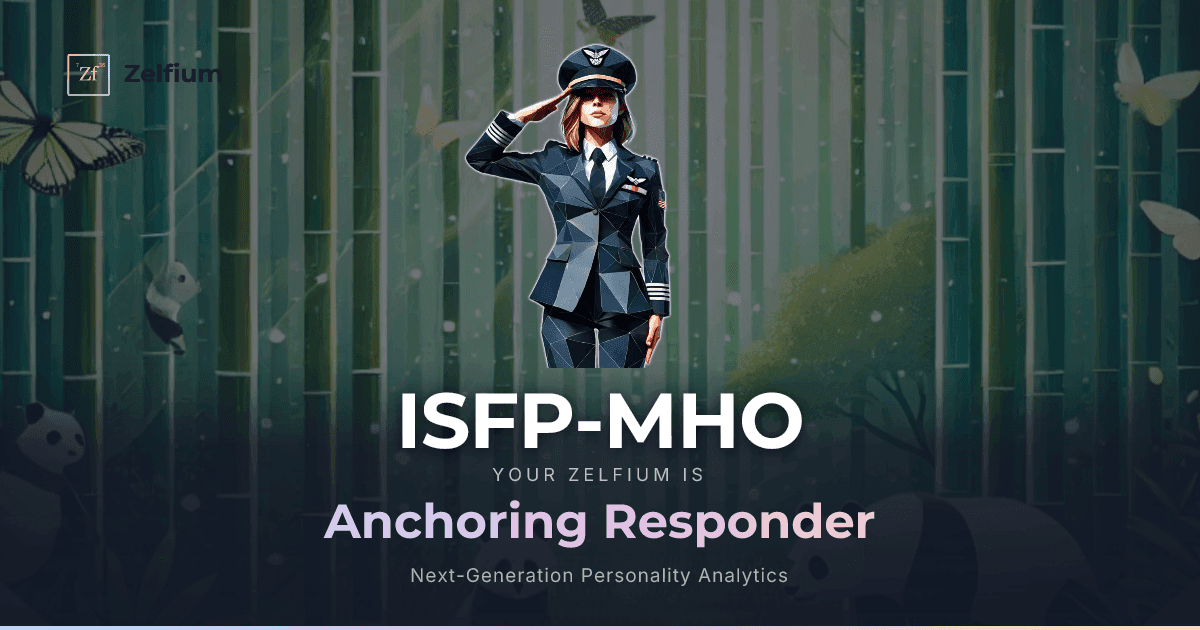
The Anchoring Responder
There is a quiet power in someone who creates beauty from a place of unshakable emotional steadiness — who feels the world deeply enough to make art from it, and trusts the world enough to believe that the art will matter. The ISFP-MHO is what happens when the ISFP's sensory-emotional artistry meets the MHO's anchoring warmth: a person who absorbs experience with vivid intensity, transforms it through personal values, and offers it back to the world from a foundation so emotionally stable that others instinctively gather around it. Where the ISFP alone might wonder whether the beauty created is enough, whether the feelings expressed will be received, whether the moment of vulnerability was wise, the MHO background provides a steady reassurance — not loud, not dramatic, but constant. Things will be alright. The work matters. The people are worth trusting. This combination produces someone whose creative and relational life carries a quality of grounded generosity that is as nourishing as it is rare — an artist who is also an anchor, holding the space for others to find their own footing while quietly creating something beautiful in the process.
The ISFP's four dimensions — introversion, Sensory awareness, Feeling, and Pioneering openness — create someone who lives in rich sensory detail, navigates by personal values, and moves through life with a fluid responsiveness that prefers freedom to structure. The MHO's three dimensions — maintaining, harmony, and optimism — create an inner world oriented toward preserving what is valuable, sustaining human connection with patient devotion, and meeting difficulty with a resilient confidence that refuses to catastrophize. When these layers meet, the spontaneous artist gains an emotional ballast that changes everything.
The ISFP's Pioneering openness and the MHO's maintaining orientation engage in the same fundamental negotiation found in the MHR combination, but with a crucial difference: optimism replaces responsiveness. Instead of a guardian who scans for threats, the ISFP-MHO has a stabilizer who trusts that threats will be manageable. This produces a different quality of creative and personal life — less vigilant, more at ease, more willing to let things unfold at their own pace. The spontaneity of the ISFP is not reined in by anxiety but gently nested within a confidence that the structure of life will hold even when the moment takes an unexpected turn.
The intersection of the ISFP's Feeling dimension and the MHO's harmonious orientation produces a doubled warmth that defines much of this type's relational life. Both dimensions orient toward caring for others and valuing human connection, but Feeling does so through deeply personal values and the MHO's harmony does so through interpersonal attunement and a commitment to trust. Together, they produce a quality of presence that others find profoundly comforting — a person who is both authentically themselves and genuinely attentive to others, without any tension between the two.
The MHO's optimism interacts with the ISFP's Sensory groundedness to create an unusual equanimity. The ISFP is anchored in the present moment — in the actual texture of what is happening right now. Optimism adds a forward-looking trust that what comes next will be workable. This combination creates someone who is neither lost in the past nor anxious about the future but genuinely content in the present while carrying a quiet confidence that the future holds its own gifts. This emotional steadiness allows the ISFP-MHO to be fully available to the current moment — to the person in front of them, to the creative work in hand, to the sensory experience unfolding — without the distraction of worry.
The ISFP-MHO possesses an extraordinary capacity for sustained warmth. Many people can be kind in bursts; the ISFP-MHO is kind as a way of being. The maintaining dimension ensures consistency over time, the harmonious dimension ensures emotional authenticity, the optimistic dimension prevents burnout from chronic giving, and the ISFP's Feeling dimension ensures that the warmth is rooted in genuine personal values rather than social performance. This combination produces someone whose care does not flag, does not become transactional, and does not require reciprocation to continue. People around the ISFP-MHO often describe a sense of being unconditionally accepted — not judged, not evaluated, simply welcomed as they are.
There is also a distinctive creative resilience. The ISFP's Pioneering dimension can struggle with sustained creative effort, losing momentum when inspiration fades or when the work encounters difficulty. The MHO's maintaining orientation provides the staying power to continue refining even when the initial excitement has passed, and optimism provides the emotional resilience to absorb setbacks without losing faith in the work. This produces a creative practice that has both the ISFP's characteristic authenticity and a steadiness that allows projects to reach completion.
Finally, the ISFP-MHO brings a gift for creating spaces — physical, emotional, relational — that feel like home. The Sensory dimension ensures aesthetic sensitivity; the maintaining orientation ensures reliability; the harmonious dimension ensures emotional warmth; and optimism ensures that the atmosphere carries lightness rather than weight. The result is someone who creates environments that people want to return to — places that feel safe not because they are controlled but because they are held together by genuine, unhurried care.
The primary tension in the ISFP-MHO is between the Pioneering desire for freedom and the maintaining drive to preserve what has been built. This tension is softened by optimism — the ISFP-MHO trusts that everything will work out, which reduces the urgency of the conflict — but it is not eliminated. There are still moments when the desire to follow a creative impulse or a spontaneous opportunity clashes with the awareness that stability depends on showing up consistently. The ISFP-MHO may defer personal creative adventures indefinitely, not out of anxiety but out of a gentle, optimism-infused conviction that "there will be time for that later" — which may or may not prove true.
A second tension exists between the MHO's optimism and the ISFP's Feeling-driven emotional depth. When something genuinely painful happens — a betrayal, a loss, a failure that touches core values — the Feeling dimension responds with an intensity that optimism alone cannot immediately process. The MHO's instinct is to move toward recovery, to believe that the wound will heal, to find the path forward. The ISFP's Feeling dimension needs time to sit with the pain, to honor it fully before releasing it. When optimism reaches for resolution too quickly, important emotional truths can be skipped over, leaving unprocessed grief beneath a surface that appears to have already recovered. Learning to let the Feeling dimension complete its work before optimism begins its own is a subtle but important growth edge.
There is also the tension of self-advocacy. The combination of the ISFP's value-driven devotion, the MHO's harmonious orientation, and the optimistic trust that one's own needs will eventually be met can produce a pattern of perpetual deferral. The ISFP-MHO waits, trusts, gives — and the personal turn that was being patiently awaited may never arrive on its own. Learning that asking for what is needed is not a disruption of harmony but an extension of it — that a relationship where one person permanently accommodates is not truly harmonious — is where the deepest growth lives.
Growth for the ISFP-MHO is not about becoming less generous or less trusting. It is about recognizing that the anchor, too, deserves to be held. The steady warmth that has been offered to others with such consistency is needed internally as well — not as self-indulgence but as the maintenance that keeps the giving sustainable. The creative life that has been patiently available to others deserves seasons where it is pursued purely for its own sake — not useful, not shared, not in service of anyone else's comfort, but simply alive and free. The ISFP-MHO who learns to treat self-care as an act of integrity rather than an act of selfishness discovers that the foundation does not crack when weight is redistributed — it settles more deeply, more securely, and holds more than it ever held before. The anchor holds best when it is properly maintained. And the art that emerges from a person who is both generous and genuinely replenished carries a quality that mere sacrifice can never produce: the warmth of someone who gives not from depletion but from overflow.
The ISFP-MHO portrait drawn here is the "pure form" — what emerges when every pole swings fully in this direction. In reality, each of your dimensions carries a different intensity, and at every intersection, a unique chemistry unfolds. Even a slight tilt in one dimension creates an entirely different internal dynamic — that is the resolution of Zelfium's 7-dimension model.
Zelfium measures each of 36 facets on a 6-point scale. The number of possible patterns:
6³⁶
possible patterns
vs all humans ever born
880 trillion ×
~117 billion humans have ever lived — repeat that 880 trillion times and you still can't fill every pattern
vs stars in the observable universe
~50,000 ×
~200 sextillion stars in the observable universe — still not enough
vs grains of sand on Earth
~1 billion ×
~7.5 quintillion grains of sand — multiply by a billion
vs current world population
~1.3 quintillion ×
Line up 1.3 quintillion copies of today's 8 billion people to fill every type
More than 50,000 times the number of every star in the observable universe. That is the resolution of your personality.
So don't fit yourself into this description too tightly. ISFP-MHO is a compass showing the direction your personality leans — not a box that defines everything you are. The pattern woven by your 36 facets is singular in this universe. To discover that one-of-a-kind blend — to find your own ISFP-MHO — take the assessment.