

Loading...
Loading...
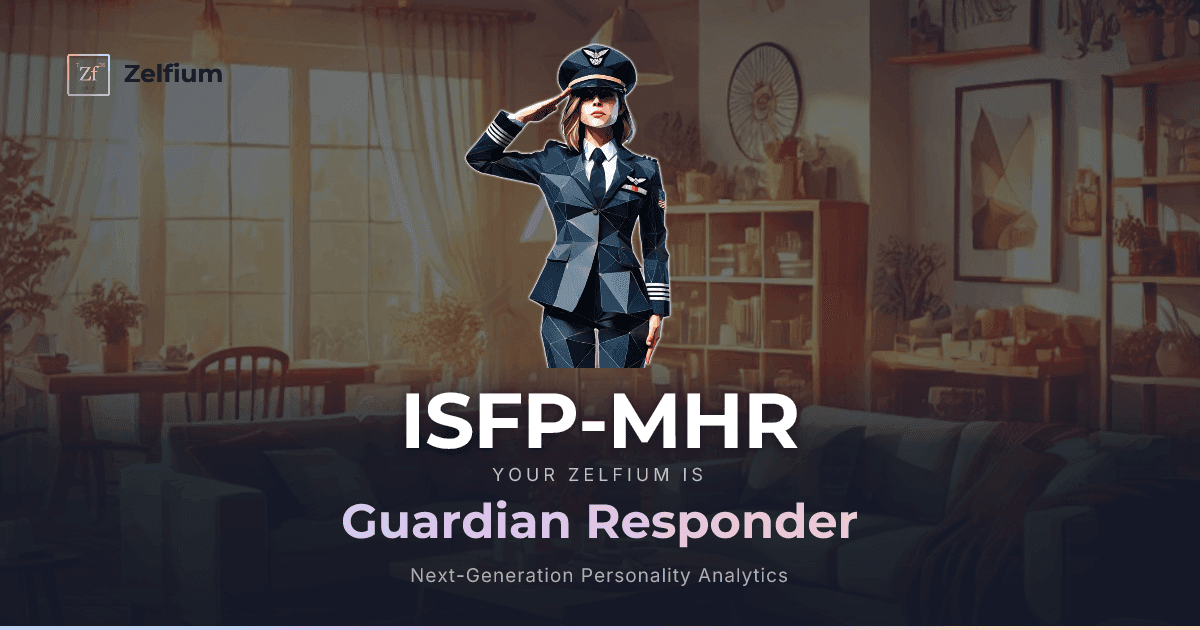
The Guardian Responder
There is a particular tenderness that emerges when someone whose creative gifts flow from deep feeling also carries an unwavering commitment to protecting the people and bonds that give life its meaning. The ISFP-MHR is what happens when the ISFP's sensory-emotional artistry meets the MHR's guardian nature — a combination that produces someone who creates beauty not as an end in itself but as an act of shelter. The ISFP feels the world with unusual intensity and responds through personal values; the MHR preserves what matters, tends relationships with patient devotion, and detects threats to the people nearby before anyone else has noticed something is wrong. Together, these layers produce a person whose creative expression is inseparable from an instinct to protect — the meal cooked with care for a struggling friend, the home arranged to feel like a sanctuary, the quiet act of noticing that someone's light has dimmed and finding a way, without words, to help rekindle it. The ISFP-MHR does not create for an audience. This type creates to hold the world together for the people who matter most.
The ISFP's four dimensions — introversion, Sensory awareness, Feeling, and Pioneering openness — create someone who lives close to the sensory surface of experience, processes the world through deeply held values, and moves with a responsive fluidity that prioritizes authenticity over convention. The MHR's three dimensions — maintaining, harmony, and responsiveness — create an inner world oriented toward preserving stability, sustaining human bonds, and detecting environmental shifts that might threaten either. When these layers meet, the spontaneous artist gains a guardian's vigilance.
The ISFP's Pioneering openness and the MHR's maintaining orientation create the most immediately visible tension and the most productive collaboration. Pioneering wants to follow the moment — to pursue the creative impulse wherever it leads, to remain open to whatever arrives. Maintaining wants to protect what has already been built — the relationships, the routines, the carefully assembled stability that makes life feel safe. In the ISFP-MHR, these two forces negotiate constantly, and the negotiation produces something distinctive: a spontaneity that knows where its limits are, a freedom that returns home. This type improvises within a structure of care — creating, exploring, and responding to the moment without ever losing sight of the people who depend on consistency.
The intersection of the ISFP's Feeling dimension and the MHR's harmonious orientation deepens the emotional life considerably. Both dimensions orient toward human connection and personal values, but they approach from different angles. Feeling is individual and identity-based — caring because something resonates with the deepest sense of self. Harmony is relational and interpersonal — caring because the well-being of others is felt as inseparable from one's own. Together, they produce a person whose concern for others is both deeply personal and genuinely selfless, and whose emotional investment in relationships is more intense than either dimension alone would create.
The MHR's responsiveness amplifies the ISFP's already acute sensory awareness, but redirects it toward a specific purpose. Where the ISFP's Sensory dimension naturally attends to beauty, texture, and the quality of present-moment experience, the MHR's responsiveness adds a layer of threat detection — scanning for what might go wrong, what might hurt someone, what might disrupt the carefully maintained equilibrium. The ISFP-MHR perceives beauty and danger simultaneously, and the instinct is always to use the one to address the other.
The ISFP-MHR possesses an extraordinary capacity for creating environments where people feel genuinely safe. This is not the safety of rules and boundaries — it is the safety of being in the presence of someone who notices everything, cares deeply, and responds with acts of tangible, sensory kindness. The meal that appears when energy is low, the blanket placed without being asked, the subtle adjustment of lighting or music that shifts the emotional temperature of a room — these are not accidents. They are the products of a perceptual system that is simultaneously attuned to sensory beauty and human need.
There is also a distinctive quality of loyalty in the ISFP-MHR that others find deeply reassuring. The maintaining dimension ensures commitment over time; the harmonious dimension ensures that commitment is expressed through genuine emotional attunement rather than mere duty; and the ISFP's Feeling dimension ensures that the loyalty is rooted in authentic personal values rather than obligation. People who are loved by the ISFP-MHR know they are loved in a way that will not waver when circumstances change — and that knowledge creates bonds of unusual depth and resilience.
Finally, the ISFP-MHR brings a sensory intelligence to caregiving that most people lack. The aesthetic dimension is not separate from the protective one — it is part of it. This type understands intuitively that beauty itself is a form of shelter, that a well-made space can heal, that the right gesture at the right moment communicates more than any words could convey. This integration of aesthetic sensitivity with protective instinct is what makes the ISFP-MHR's care feel so complete.
The deepest tension in the ISFP-MHR is between the Pioneering desire for freedom and the maintaining drive to preserve stability. The ISFP's spirit needs room to breathe — to follow creative impulses, to respond to the world without predetermined plans, to be available for the unscripted moment. The MHR's guardian nature needs things to stay in place — routines maintained, people cared for, disruptions anticipated and prevented. These two forces can create an exhausting internal oscillation: the desire to wander pulled back by the responsibility to stay, the yearning for spontaneity constrained by the knowledge that others depend on consistency. The ISFP-MHR may feel guilty for wanting freedom and trapped by choosing stability — a tension that has no permanent resolution, only ongoing negotiation.
A second tension emerges from the doubled sensitivity of this combination. The ISFP already feels deeply; the MHR's responsiveness adds a layer of hypervigilant awareness that scans for danger at all times. Together, these create a person who absorbs an enormous amount of emotional and sensory information from the environment — much of it painful, much of it concerning threats that may never materialize. The burden of perceiving so much, caring so much, and anticipating so much can be quietly overwhelming, especially because the introversion and the desire to protect others often prevent the ISFP-MHR from expressing the weight that is being carried.
There is also the tension of self-sacrifice. The combination of the ISFP's Feeling-driven devotion and the MHR's harmonious orientation toward others' needs can produce a pattern of giving that leaves nothing for the giver. The ISFP-MHR may pour creative energy, emotional attention, and practical care into the lives of others with such consistency that personal needs — creative ambitions, individual desires, the simple need for rest — are deferred indefinitely. The care for others is genuine and beautiful; the neglect of self is often invisible until it produces exhaustion or quiet resentment that seems to arrive without warning.
Growth for the ISFP-MHR is not about caring less or guarding less. It is about extending the same quality of care inward — treating one's own creative needs, emotional limits, and physical well-being with the same attentiveness that is so naturally offered to others. The guardian watches over everyone in the room; growth begins when the guardian realizes they are also in the room. The creativity that is so readily used to shelter others deserves the chance to exist for its own sake — not every beautiful thing needs to be useful, and not every act of creation needs to serve someone else's need. The ISFP-MHR who learns to create selfishly now and then — not as an act of withdrawal but as an act of replenishment — discovers that the wellspring of care actually deepens when it is allowed to flow in both directions. Protection that includes self-protection is not diminished. It is sustainable — and sustainability is the only form of devotion that lasts long enough to matter.
The ISFP-MHR portrait drawn here is the "pure form" — what emerges when every pole swings fully in this direction. In reality, each of your dimensions carries a different intensity, and at every intersection, a unique chemistry unfolds. Even a slight tilt in one dimension creates an entirely different internal dynamic — that is the resolution of Zelfium's 7-dimension model.
Zelfium measures each of 36 facets on a 6-point scale. The number of possible patterns:
6³⁶
possible patterns
vs all humans ever born
880 trillion ×
~117 billion humans have ever lived — repeat that 880 trillion times and you still can't fill every pattern
vs stars in the observable universe
~50,000 ×
~200 sextillion stars in the observable universe — still not enough
vs grains of sand on Earth
~1 billion ×
~7.5 quintillion grains of sand — multiply by a billion
vs current world population
~1.3 quintillion ×
Line up 1.3 quintillion copies of today's 8 billion people to fill every type
More than 50,000 times the number of every star in the observable universe. That is the resolution of your personality.
So don't fit yourself into this description too tightly. ISFP-MHR is a compass showing the direction your personality leans — not a box that defines everything you are. The pattern woven by your 36 facets is singular in this universe. To discover that one-of-a-kind blend — to find your own ISFP-MHR — take the assessment.