

Loading...
Loading...
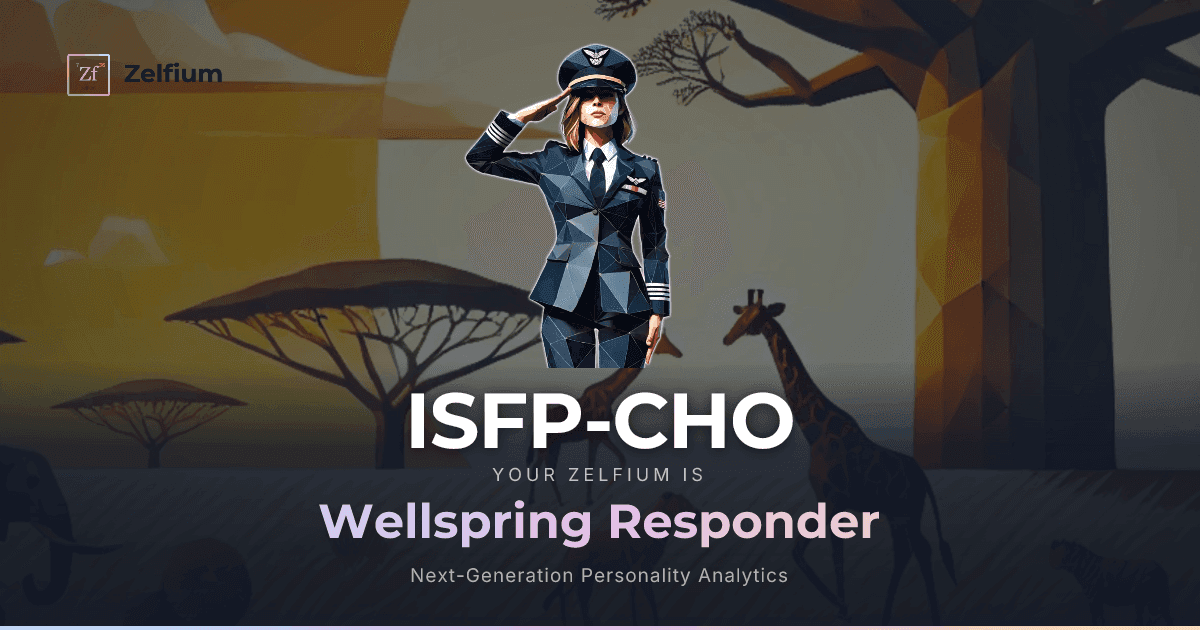
The Wellspring Responder
There is a particular warmth that emerges when someone who creates from deeply personal feeling also carries an inexhaustible faith that the world deserves beauty — and that people deserve to share in it. The ISFP-CHO is what happens when the ISFP's sensory-emotional artistry meets the CHO's wellspring nature: a person who absorbs the world through the senses, transforms it through personal values, and then — with a generosity that feels as natural as breathing — offers it back to the people nearby. Where the ISFP alone might create something quietly beautiful and wonder whether to share it, the CHO background dissolves the hesitation. The curiosity that drives growth, the harmony that reaches for connection, and the optimism that trusts the outcome together ensure that this type's creative gifts do not stay locked in private notebooks. They flow outward, carrying a particular quality of warmth and invitation that makes others feel not just welcomed into the experience but somehow better for having been included. The ISFP-CHO does not just create — this type creates communion.
The ISFP's four dimensions — introversion, Sensory awareness, Feeling, and Pioneering openness — produce someone who lives close to the surface of experience, absorbing beauty with unusual intensity and responding to the world through the filter of personal values rather than external rules. The CHO's three dimensions — curiosity, harmony, and optimism — produce an inner world that is perpetually reaching for something new, deeply invested in people, and emotionally buoyant enough to weather difficulty without losing direction. When these layers meet, the solitary artist gains something unexpected: an instinct for shared adventure.
Introversion still sets the baseline. The ISFP-CHO recharges in quiet, processes experience internally, and needs private space to let the sensory and emotional world settle into meaning. But the CHO's harmonious dimension means that the most treasured experiences are the ones that include someone else. A sunset witnessed alone is beautiful; a sunset witnessed with a person who matters is transformed into something that lives in both people forever. The ISFP's creative impulse — which might otherwise remain a private dialogue between self and world — develops a social dimension that is genuinely generous rather than performative.
The CHO's curiosity amplifies the ISFP's relationship with sensory experience in a particular way. Rather than deepening into a single craft or aesthetic, curiosity gently widens the aperture — encouraging exploration of new materials, new places, new forms of beauty that the Sensory dimension had not yet encountered. This gives the ISFP-CHO's creative life a quality of perpetual freshness. The work does not become repetitive because curiosity refuses to let it settle, and the optimistic temperament means that experiments that fail are absorbed with good humor rather than existential crisis.
The most distinctive chemistry, however, occurs between the ISFP's Feeling dimension and the CHO's optimism. Feeling navigates by deeply held values and can become heavy under the weight of the world's failures to live up to them. Optimism offers a counterbalance — not by minimizing what is wrong, but by maintaining a steady conviction that things can improve and that beauty is worth making even in imperfect conditions. The ISFP-CHO does not ignore suffering. This type simply refuses to let suffering have the last word, and the creative acts that emerge from this refusal carry a particular quality of hope that others find nourishing without quite understanding why.
The ISFP-CHO possesses an unusual capacity to create experiences that bring people together without anyone feeling managed or directed. There is an effortlessness to the way this type assembles a gathering, selects an environment, or shares a discovery — because the motivation is never to impress but to include. The ISFP's aesthetic intelligence ensures that the experience is genuinely beautiful; the CHO's warmth ensures that the people involved feel genuinely valued; and the optimistic undertone means that even ordinary moments take on a quality of celebration.
There is also a distinctive resilience in the ISFP-CHO's creative life. The Pioneering dimension of the ISFP can sometimes struggle with sustained effort, losing momentum when inspiration fades. The CHO's optimism provides a buffer against this — a quiet confidence that the next wave of inspiration will come, that the current dry spell is temporary, that the work matters even when it does not feel easy. This combination produces an artist who keeps creating through seasons that would silence someone without that buoyant undertow.
Finally, the CHO's curiosity gives the ISFP's sensory gifts a breadth they might not otherwise develop. Instead of becoming a specialist in one medium or one aesthetic, the ISFP-CHO tends to be someone who moves fluidly between forms of expression — finding beauty in cooking and in photography, in conversation and in textile, in the arrangement of a room and the structure of a day. This cross-pollination keeps the creative life alive and makes the ISFP-CHO a person whose presence itself feels like an invitation to see the world with fresher eyes.
The central tension in the ISFP-CHO lives between the introvert's need for private space and the wellspring's need to share. The ISFP requires solitude to process the sensory-emotional world — to let experiences settle, to find their meaning without interference. The CHO's harmonious and curious dimensions pull toward people, toward shared discovery, toward the collective energy that makes exploration feel complete. This push and pull can create a rhythm of withdrawal and engagement that confuses both the ISFP-CHO and the people nearby — one moment deeply present and warmly inclusive, the next retreating without explanation into a private world that admits no visitors.
A subtler tension exists between the ISFP's Feeling-driven values and the CHO's optimism. When something genuinely violates the ISFP's values — an act of cruelty witnessed, a relationship that has become dishonest — the Feeling response is intense, visceral, and deeply personal. Optimism, however, has a tendency to reach for resolution before the pain has been fully honored. The ISFP-CHO may find themselves smoothing over their own justified anger or grief in the name of moving forward, and this premature resolution can leave important emotional truths unprocessed. Learning to sit with the difficult feelings — to let the values speak their full piece before optimism begins its healing work — is an ongoing practice.
There is also the tension between depth and breadth in creative life. The ISFP's Sensory dimension wants to go deep — to master a material, to know a craft from the inside. The CHO's curiosity wants to go wide — to taste everything, to explore every variation. The ISFP-CHO can feel scattered by curiosity's insistence on novelty while simultaneously feeling constrained by the Sensory dimension's desire to stay with what is known and loved. Finding a rhythm that honors both — periods of exploratory play followed by periods of focused refinement — is the balance that allows this type's gifts to fully mature.
Growth for the ISFP-CHO is not about choosing between solitude and sharing, between depth and breadth, between honoring pain and trusting recovery. It is about learning to hold all of these as movements in a larger rhythm rather than as contradictions that must be resolved. The generous impulse to share every beautiful discovery is real and good — and so is the need to sometimes keep a discovery private, to let it mature in silence before offering it to the world. The optimism that believes in renewal is a genuine strength — and so is the courage to stay with grief long enough to hear what it has to teach. The ISFP-CHO who learns to trust the rhythm — who stops trying to be constantly available, constantly creating, constantly including — discovers that the wellspring runs deeper when it is allowed to rest. And when it flows again, as it always does, it carries something richer than before: a beauty that has been tested by stillness, a warmth that has been tempered by honesty, and an invitation that is all the more welcoming for knowing that the person extending it has also learned when to close the door and simply be.
The ISFP-CHO portrait drawn here is the "pure form" — what emerges when every pole swings fully in this direction. In reality, each of your dimensions carries a different intensity, and at every intersection, a unique chemistry unfolds. Even a slight tilt in one dimension creates an entirely different internal dynamic — that is the resolution of Zelfium's 7-dimension model.
Zelfium measures each of 36 facets on a 6-point scale. The number of possible patterns:
6³⁶
possible patterns
vs all humans ever born
880 trillion ×
~117 billion humans have ever lived — repeat that 880 trillion times and you still can't fill every pattern
vs stars in the observable universe
~50,000 ×
~200 sextillion stars in the observable universe — still not enough
vs grains of sand on Earth
~1 billion ×
~7.5 quintillion grains of sand — multiply by a billion
vs current world population
~1.3 quintillion ×
Line up 1.3 quintillion copies of today's 8 billion people to fill every type
More than 50,000 times the number of every star in the observable universe. That is the resolution of your personality.
So don't fit yourself into this description too tightly. ISFP-CHO is a compass showing the direction your personality leans — not a box that defines everything you are. The pattern woven by your 36 facets is singular in this universe. To discover that one-of-a-kind blend — to find your own ISFP-CHO — take the assessment.