

Loading...
Loading...
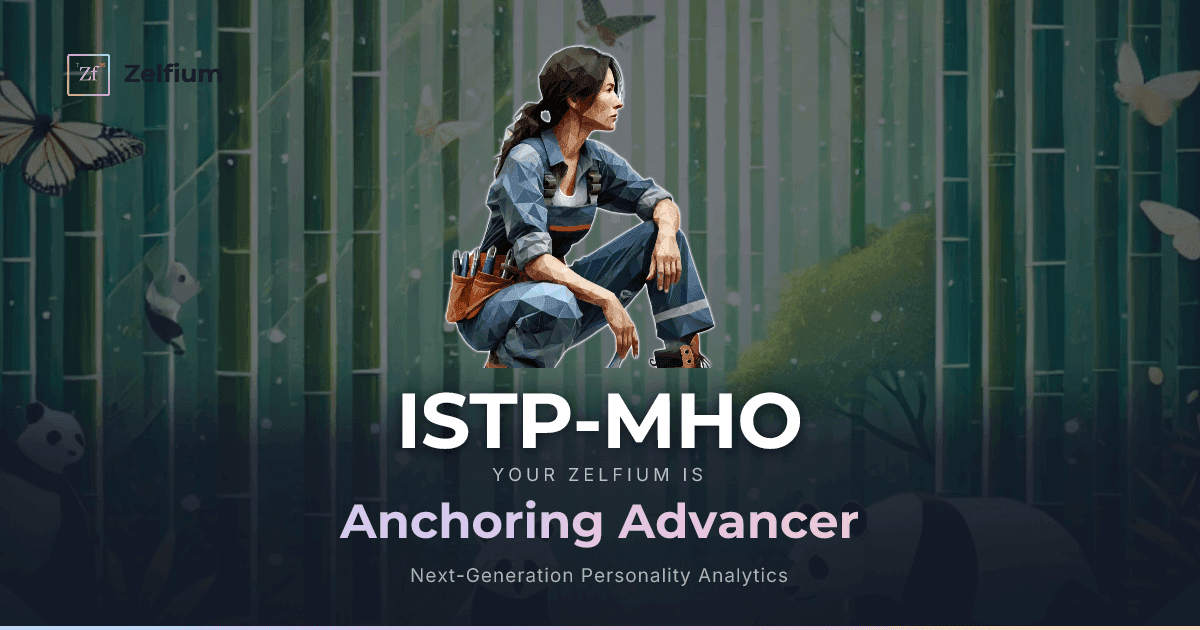
The Anchoring Advancer
Some people build things that last. The ISTP-MHO builds the conditions under which lasting becomes possible. This is what happens when the ISTP's practical mastery — the sensory acuity, the logical clarity, the adaptive freedom — meets the MHO's anchoring nature, where devotion to what has been built, warmth toward the people who built it, and a resilient confidence that everything will hold merge into a single steadying force. The ISTP already brings remarkable hands-on competence and the ability to solve problems with quiet efficiency. The MHO background adds something the pure ISTP rarely develops on its own: a commitment to staying — to maintaining not just systems but relationships, not just equipment but morale, not just function but the feeling of safety that allows others to do their best work. The result is a person who combines technical reliability with emotional steadiness in a way that makes them the quiet center of gravity in any workshop, team, or household. Others may not notice what the ISTP-MHO does until it stops being done — and then everything begins to wobble.
The ISTP's four dimensions — introversion, sensory awareness, thinking, and pioneering — create someone whose intelligence lives in the hands and in the present moment. The MHO's three dimensions — maintaining, harmony, and optimism — create an inner world that values continuity, invests deeply in people, and carries a buoyant confidence that difficulties are temporary. When these layers merge, the restless craftsman discovers something unexpected: that the most satisfying thing to build might be permanence itself.
Introversion and the maintaining dimension create a person of deep routine and quiet devotion. The ISTP typically resists structure imposed by others, but the MHO's orientation toward stability means that self-created routines — the workshop opened at the same hour, the tool cleaned after every use, the regular check-in with a trusted friend — become sources of genuine satisfaction rather than constraints. This is structure that serves rather than confines, and the ISTP-MHO builds it instinctively.
The harmony dimension gives the ISTP's practical care a relational quality it would not otherwise have. The ISTP naturally shows love through action — fixing, building, providing. The MHO's warmth ensures that these actions are received as what they are: expressions of genuine devotion. There is a seamlessness between maintaining a machine and maintaining a relationship, because in the ISTP-MHO's world, both are forms of the same fundamental act — ensuring that what matters continues to function, continues to be cared for, continues to endure.
The optimism dimension interacts with the ISTP's pioneering spirit to produce a distinctive form of practical confidence. The ISTP adapts and improvises; the MHO's optimism ensures that adaptation happens without anxiety. When something breaks — and things always break — the ISTP-MHO approaches the repair with a calm assurance that is neither denial nor bravado. It is simply the lived experience of having fixed things before and the quiet trust that this time will be no different.
The ISTP-MHO possesses a rare combination of competence and constancy. Many people are skilled; fewer are reliably present. Many people are warm; fewer can back that warmth with practical action. The ISTP-MHO is the person who both cares and can do something about it — who notices the problem, has the skill to address it, and shows up consistently enough that others stop worrying about whether help will come. This combination of capability and faithfulness creates a form of trust that is almost impossible to replicate.
There is also a stabilizing presence that operates below the level of conscious awareness. The ISTP-MHO does not manage morale through speeches or interventions. The steadying effect comes from consistency itself — the regular rhythm of competent attention, the calm demeanor when things go wrong, the quiet optimism that difficulties will pass. People around this type find themselves feeling more grounded without understanding why, and teams function better without being able to point to any single dramatic contribution.
The practical optimism of this combination is itself a significant strength. The ISTP's diagnostic precision identifies real problems; the MHO's optimism prevents that identification from becoming paralyzing. Problems are acknowledged clearly and then addressed with a steady confidence that the solution exists and will be found. This is neither denial nor anxiety — it is the functional middle ground where effective action lives.
The central tension in the ISTP-MHO is between the pioneering dimension's need for freedom and the maintaining dimension's gravitational pull toward the known. The ISTP wants to explore — new challenges, new techniques, new territories. The MHO wants to preserve — the workshop that has been built, the relationships that have been cultivated, the routines that provide daily structure. These forces can create a quiet but persistent inner conflict: the itch to leave competing with the need to stay, the excitement of novelty wrestling with the comfort of continuity.
A subtler tension exists between the MHO's optimism and the ISTP's analytical honesty. Optimism says everything will be fine; the thinking dimension sometimes knows it will not be. The ISTP-MHO can find themselves caught between the instinct to reassure and the instinct to speak the truth — between protecting others' comfort and respecting their right to accurate information. When the harmony dimension adds its preference for avoiding conflict, the temptation to smooth things over rather than address them directly can become significant.
There is also the risk of invisible self-neglect. The MHO's devotion to others and the ISTP's preference for action over self-reflection can combine to produce a person who maintains everything and everyone except themselves. The workshop is immaculate; the relationships are tended; the daily routines run like clockwork — but the internal state of the person keeping all of this running may go unexamined for far too long. The ISTP-MHO's own needs can become invisible even to themselves, buried beneath the steady rhythm of care.
Growth for the ISTP-MHO is not about becoming more adventurous or less devoted. It is about recognizing that the maintenance instinct — so generously applied to everything and everyone nearby — deserves to be turned inward as well. The person who keeps the systems running is also a system that requires attention. The craftsman who notices the first signs of wear in every machine can learn to notice the same signs in themselves — the fatigue that has been ignored, the desire that has been deferred, the question that has been set aside because there was always something more pressing to fix for someone else. Including oneself in the circle of things worth maintaining is not selfishness. It is the most practical form of sustainability there is — the recognition that the anchor holds only as long as the anchor itself is cared for.
The ISTP-MHO portrait drawn here is the "pure form" — what emerges when every pole swings fully in this direction. In reality, each of your dimensions carries a different intensity, and at every intersection, a unique chemistry unfolds. Even a slight tilt in one dimension creates an entirely different internal dynamic — that is the resolution of Zelfium's 7-dimension model.
Zelfium measures each of 36 facets on a 6-point scale. The number of possible patterns:
6³⁶
possible patterns
vs all humans ever born
880 trillion ×
~117 billion humans have ever lived — repeat that 880 trillion times and you still can't fill every pattern
vs stars in the observable universe
~50,000 ×
~200 sextillion stars in the observable universe — still not enough
vs grains of sand on Earth
~1 billion ×
~7.5 quintillion grains of sand — multiply by a billion
vs current world population
~1.3 quintillion ×
Line up 1.3 quintillion copies of today's 8 billion people to fill every type
More than 50,000 times the number of every star in the observable universe. That is the resolution of your personality.
So don't fit yourself into this description too tightly. ISTP-MHO is a compass showing the direction your personality leans — not a box that defines everything you are. The pattern woven by your 36 facets is singular in this universe. To discover that one-of-a-kind blend — to find your own ISTP-MHO — take the assessment.