
Loading...
Loading...
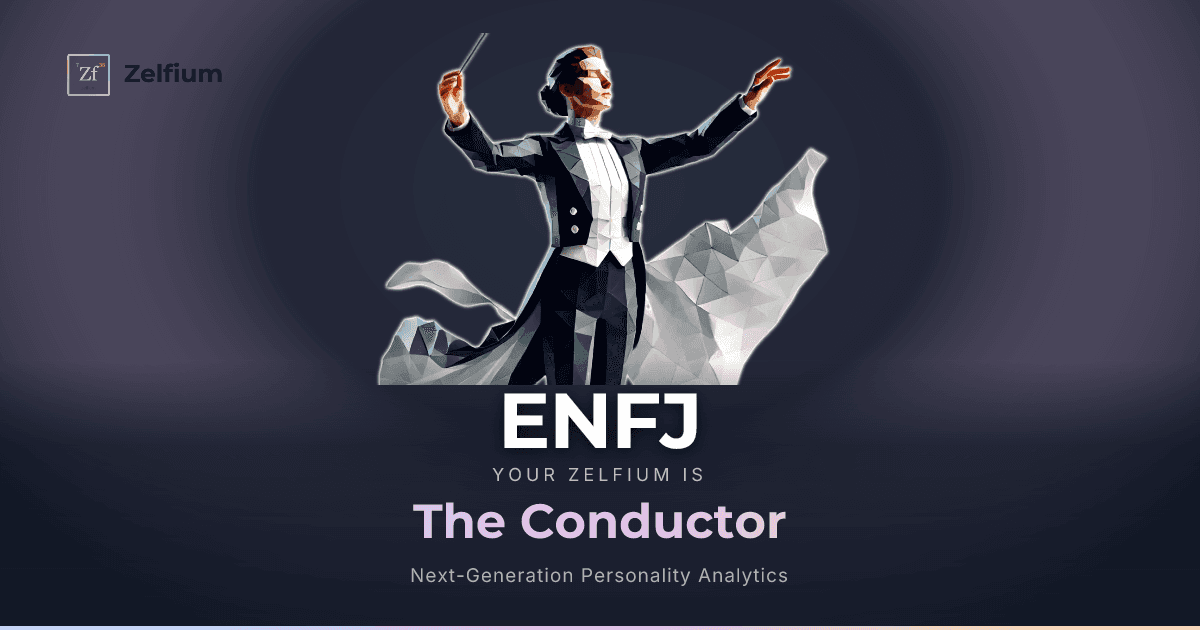
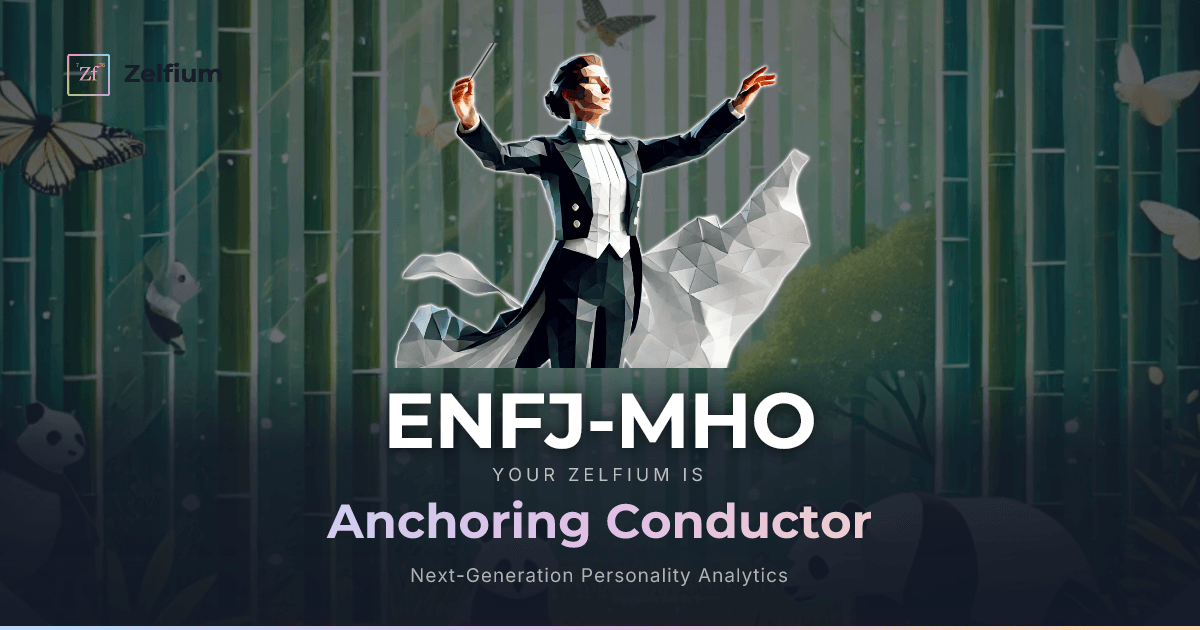
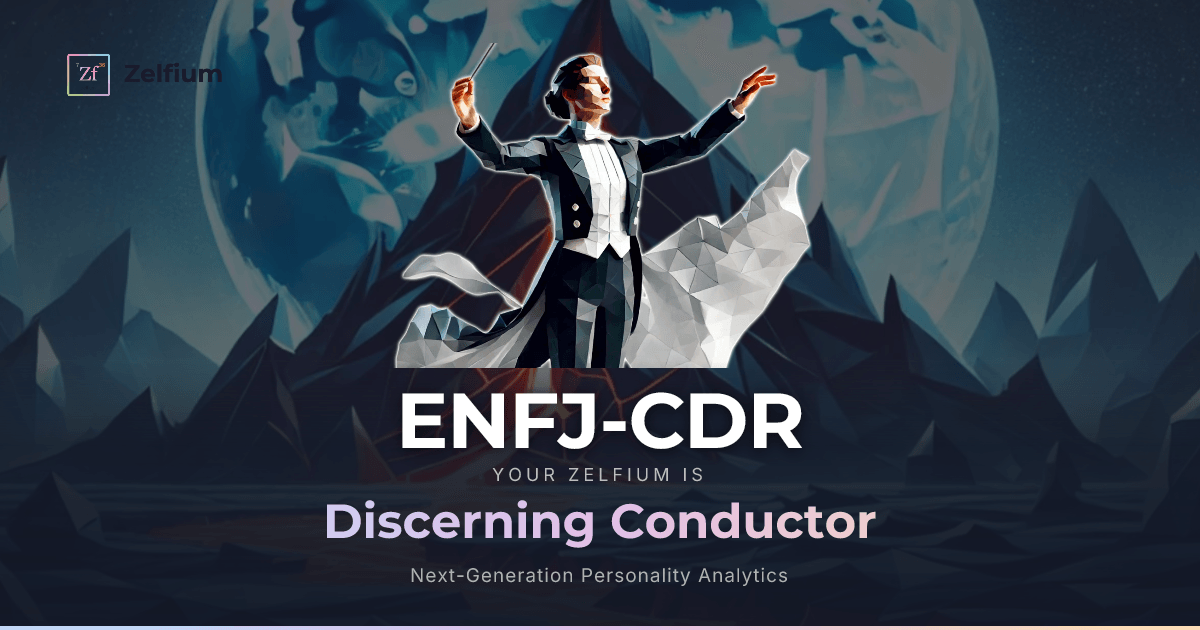
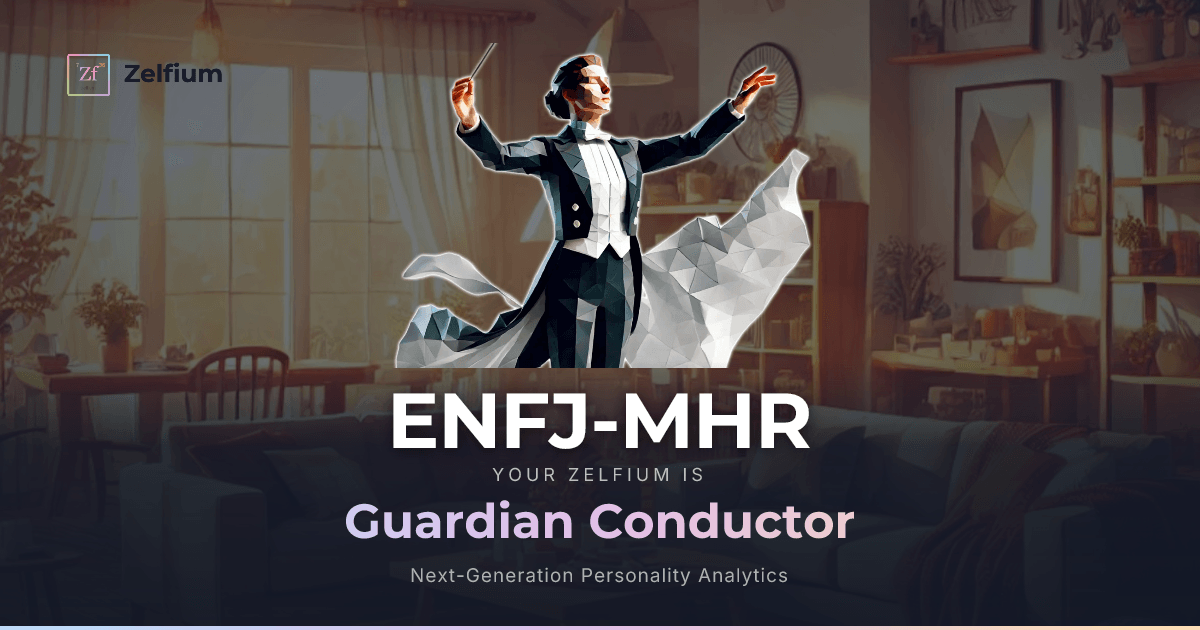
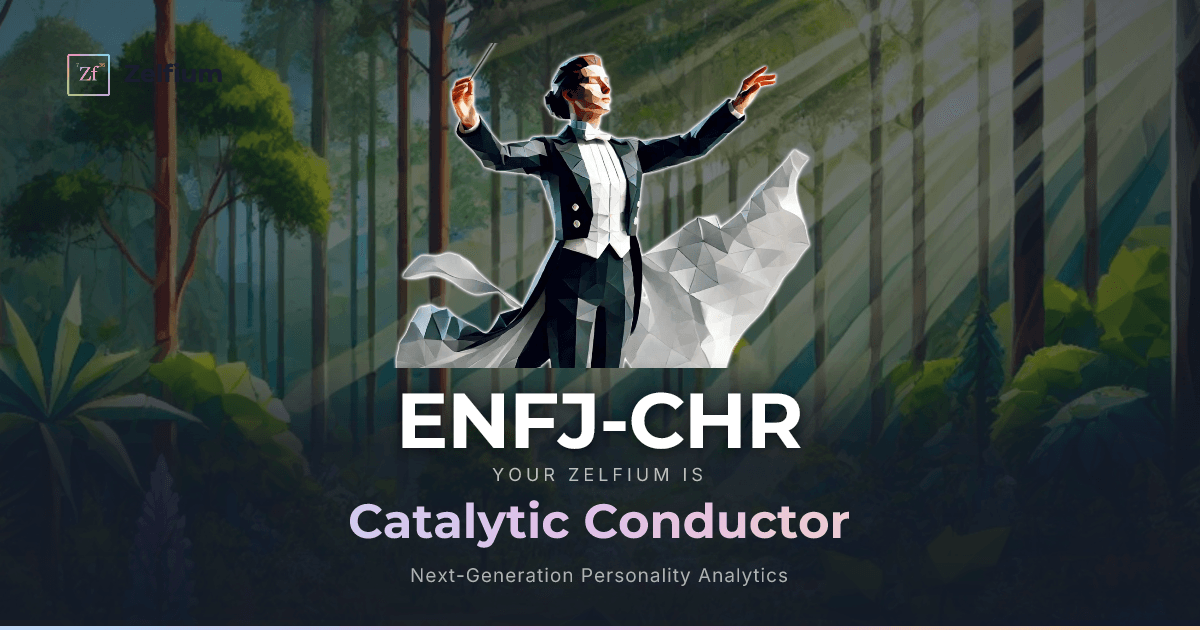
The Conductor
The ENFJ embodies one of the most interpersonally gifted and purposeful combinations in the Zelfium personality system. These four letters describe the forces that shape how this type connects, leads, and serves. Extraverted (E) means being energized by being with people — not as an audience, but as a community that is actively being built and nurtured. OpeN (N) reflects a natural orientation toward meaning, patterns, and the larger story behind surface-level events. Feeling (F) describes a deep commitment to making decisions based on values, empathy, and the impact on human lives. Judging (J) captures the drive to bring order, purpose, and follow-through to the causes and people that matter most.
Together, these dimensions create a person who sees the potential in others before they see it in themselves — and who feels personally called to help them realize it. The ENFJ is not content with shallow interactions or meaningless routines. This type wants life to serve something larger, relationships to be genuine, and influence to leave people better than it found them. The combination of emotional intelligence, strategic vision, and disciplined execution makes the ENFJ a natural mentor, advocate, and catalyst for growth. People do not just enjoy being around this type — they become more of who they are meant to be in an ENFJ's presence.
The same 4-letter type produces 8 distinct profiles depending on the remaining 3 dimensions.
Extraverted / Introverted
The ENFJ's energy flows outward in a way that is distinctly purposeful. Social settings attract this type not for entertainment alone, but because that is where they feel most useful, most alive, most aligned with their sense of purpose. A room full of people is not a crowd to the ENFJ; it is a web of relationships, needs, and possibilities that they instinctively begin to tend.
ENFJs have a rare ability to make people feel individually seen even in a group setting. While managing the energy of a gathering, they simultaneously track the person who seems disconnected, the conversation that is veering into conflict, the quiet voice that has something important to say. This multidimensional social awareness is not something that switches on — it runs continuously, like a background process that shapes every interaction.
The vulnerability in this Extraversion is depletion. Because ENFJs pour so much energy outward, they can exhaust themselves without realizing it — especially when the people around them are struggling and the pull to hold them together is strong. Learning to recognize one's own emptiness before it becomes a crisis, and giving oneself permission to step away without guilt, is not a betrayal of the caring nature. It is the only way to sustain it.
OpeN / Sensory
The ENFJ sees beneath the surface. Where others take things at face value, this type is reading between the lines — sensing the unspoken tension in a team, perceiving the pattern in a person's repeated choices, imagining the future trajectory of a relationship or a project based on currents that are invisible to most. This Openness is not abstract daydreaming; it is applied intuition, always in service of understanding people and situations more deeply.
The ENFJ mind naturally gravitates toward meaning. Less interested in what happened than in what it means — what it reveals about someone's character, what it portends for the future, what larger story it belongs to. This gives the ENFJ a remarkable ability to contextualize individual moments within a broader narrative, which is one of the reasons people find their guidance so valuable.
The challenge of this dimension is that perception of potential can sometimes outpace reality. The ENFJ may see what someone could become so clearly that frustration builds when they do not move toward it, or meaning may be projected onto situations that are simpler than the mind insists they must be. Grounding intuition in patient observation — allowing people and situations to reveal themselves at their own pace rather than fitting them into a preconceived narrative — deepens the accuracy of insight without diminishing its power.
Thinking / Feeling
Empathy is not just something the ENFJ practices — it is the lens through which the world is understood. When encountering a decision, the instinct is to consider its human impact first. Who will be affected? What values are at stake? Is this fair? Is this kind? These questions are not secondary to the thinking process; they are its foundation.
This Feeling orientation gives the ENFJ a profound capacity for emotional attunement. They can sense what someone needs before it is articulated — sometimes before the person is aware of it themselves. In a room full of people, the ENFJ naturally gravitates toward the one who is struggling, not because they seek out suffering but because their emotional radar detects it and their values demand a response.
The growth area within this Feeling dimension is the relationship between caring and control. The deep desire for people to thrive can sometimes tip into an unconscious need to guide their choices — to steer them toward the outcome believed to be best. The most mature expression of the ENFJ's empathy is one that trusts others' capacity to find their own way, that offers wisdom without insistence, and that can sit with the discomfort of watching someone choose differently. Letting go is not abandonment — it is the deepest form of respect for another person's autonomy.
Judging / Pioneering
The ENFJ has a natural drive to organize the world around them — not for the sake of control, but in service of their values. When something matters, the response is not just strong feeling but the creation of structures to support it. Plans, timelines, follow-up systems — these are not bureaucratic tendencies but expressions of commitment. If something matters, it deserves to be done thoroughly and consistently.
This Judging quality gives the ENFJ a reliability that others count on. When a promise is made, it is kept. When a project is taken on, it moves forward. When a commitment is given to someone, they can trust it completely. In a world where good intentions frequently dissolve into inaction, this follow-through is a form of love made visible.
The tension in this dimension is between the need for closure and the open-ended nature of human growth. The ENFJ prefers things resolved, roles defined, and paths clear — but the people they mentor and the causes they serve do not always cooperate with tidy timelines. Learning to hold plans lightly, to allow for emergence and surprise, and to resist the urge to resolve every ambiguity immediately is not a weakness in the Judging function. It is its evolution — the recognition that some of the most important outcomes cannot be scheduled.
When Extraversion and Feeling converge in the ENFJ, the result is a relational presence so warm and attentive that people often feel understood in a way they have never experienced before. The ENFJ does not just listen — they listen with their whole being, picking up on emotional subtexts, noticing what is not being said, and responding with a precision that feels almost uncanny. This is the heart of the Conductor archetype: the ability to create a space so safe that others can be fully honest, even with themselves.
Openness elevates this interpersonal gift into something visionary. The ENFJ does not just see people as they are — they see who those people could become. Unrealized strengths, dormant courage, the version of someone that is waiting for permission to emerge — all of this is perceived with vivid clarity. And because this perception is combined with genuine warmth, people believe ENFJs when their potential is reflected back to them. That belief often becomes the catalyst for transformation.
Judging brings this entire vision down to earth. The ENFJ does not stop at inspiration — they help people build the bridge from here to there. Plans are created, accountability is established, follow-up happens, and presence is maintained through the messy middle of someone's growth journey. The ENFJ gift is complete: seeing the potential, feeling its importance, and doing the work to help it manifest.
The ENFJ rhythm is one of attunement followed by decisive action. Feeling and Openness work together to create a continuous stream of interpersonal awareness — always reading the emotional landscape, always processing what is beneath the surface. Judging then channels this awareness into purposeful response. The ENFJ does not just notice that someone is struggling; a plan to support them develops. Opportunity is not just sensed; the conditions to seize it are created.
Extraversion keeps this rhythm externally focused. The ENFJ's processing is relational — understanding of one's own thoughts and feelings becomes clearest when helping others navigate theirs. Teaching clarifies thinking. Mentoring refines values. Leading reveals priorities. The ENFJ is one of those rare people whose self-understanding deepens through service rather than through introspection alone.
The risk in this rhythm is that it can become so externally oriented that the inner life goes unattended. ENFJs may find themselves so busy reading others' needs that they lose contact with their own — so focused on being the person everyone can rely on that the question of who they can rely on goes unasked. Building a practice of genuine self-reflection, separate from the role of mentor or leader, is not indulgent. It is the foundation that everything else rests upon.
Relational intelligence is perhaps the ENFJ's most defining characteristic. The intersection of Extraversion, Openness, and Feeling creates a person who can connect with almost anyone — not superficially, but at the level of shared humanity. Communication style adapts intuitively, speaking the emotional language of whoever is present. With a guarded colleague, the ENFJ is patient and non-threatening. With an enthusiastic friend, they match the energy and expand it. With someone in pain, they are steady and present without trying to fix too quickly.
Judging adds structure to this empathy. The ENFJ does not just care about people in the moment — they invest in long-term development. They remember what someone said three months ago about what they were working on and ask about it. They notice growth patterns and name them. They hold people accountable to their own stated goals, not punitively but with the gentle firmness of someone who genuinely believes in their capacity.
The relational growth edge for the ENFJ is allowing others to care for them with the same depth they offer. There is a subtle asymmetry in many of the ENFJ's relationships — giving profoundly but resisting receiving. Learning to be vulnerable, to need others openly, to be the one who is held rather than the one doing the holding — this is not weakness. It is the completion of the relational circuit, and it transforms connections from admirable to truly mutual.
The central tension of the ENFJ experience is between selfless service and self-preservation. Feeling and Extraversion together create an almost gravitational pull toward others' needs, while Judging ensures that this pull is acted on with consistency and follow-through. This is beautiful — until it is not. Without conscious attention, this pattern can evolve into a quiet martyrdom where the ENFJ's own needs are perpetually postponed, their own dreams subordinated to others' growth, their own identity defined entirely by usefulness to others.
There is a deeper tension beneath this one: between the vision of who people could become and the acceptance of who they actually are. The ENFJ's Openness allows them to see extraordinary potential, but potential is not the same as reality. When the people they mentor do not grow in the ways envisioned — when they resist, regress, or choose a different path entirely — the ENFJ may experience this as a personal failure rather than as a natural part of the human experience.
The deepest growth comes from learning to hold care without attachment to outcomes. To mentor without needing guidance to be followed. To love without requiring that love to produce the results envisioned. To serve without losing oneself in service. The ENFJ who discovers this balance does not become less caring — they become sustainable in their care, and their influence deepens precisely because it is no longer dependent on being needed.
The same 4-letter type produces 8 distinct profiles depending on the remaining 3 dimensions.
The ENFJ portrait drawn here is the "pure form" — what emerges when every pole swings fully in this direction. In reality, each of your dimensions carries a different intensity, and at every intersection, a unique chemistry unfolds. Even a slight tilt in one dimension creates an entirely different internal dynamic — that is the resolution of Zelfium's 7-dimension model.
Zelfium measures each of 36 facets on a 6-point scale. The number of possible patterns:
6³⁶
possible patterns
vs all humans ever born
880 trillion ×
~117 billion humans have ever lived — repeat that 880 trillion times and you still can't fill every pattern
vs stars in the observable universe
~50,000 ×
~200 sextillion stars in the observable universe — still not enough
vs grains of sand on Earth
~1 billion ×
~7.5 quintillion grains of sand — multiply by a billion
vs current world population
~1.3 quintillion ×
Line up 1.3 quintillion copies of today's 8 billion people to fill every type
More than 50,000 times the number of every star in the observable universe. That is the resolution of your personality.
So don't fit yourself into this description too tightly. ENFJ is a compass showing the direction your personality leans — not a box that defines everything you are. The pattern woven by your 36 facets is singular in this universe. To discover that one-of-a-kind blend — to find your own ENFJ — take the assessment.