Loading...
Loading...
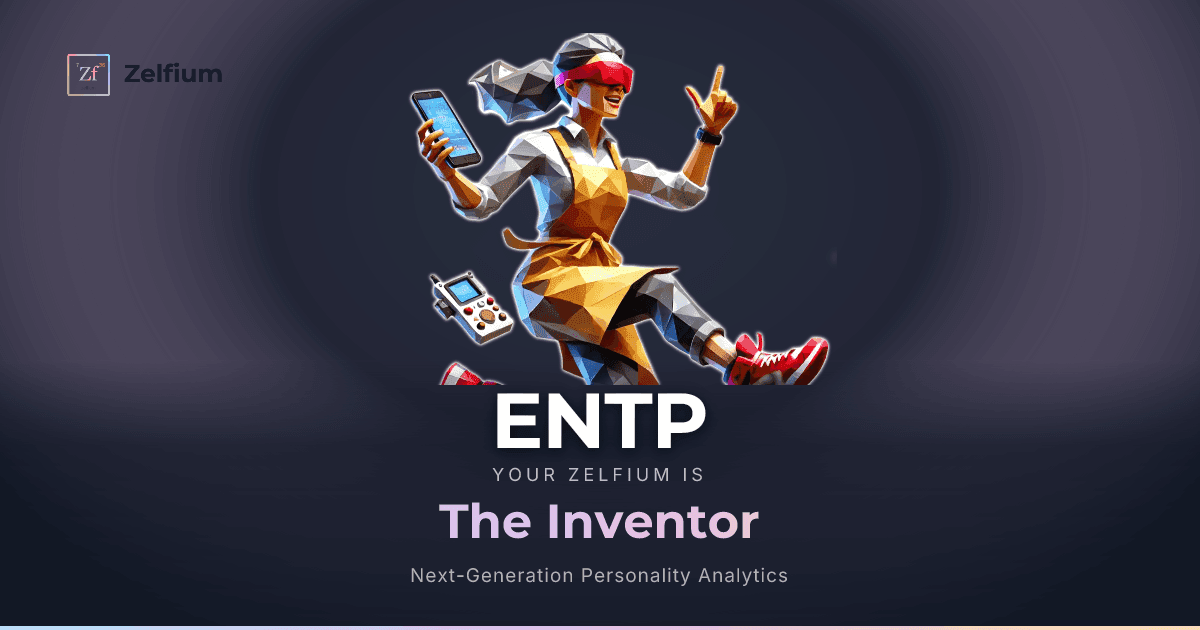
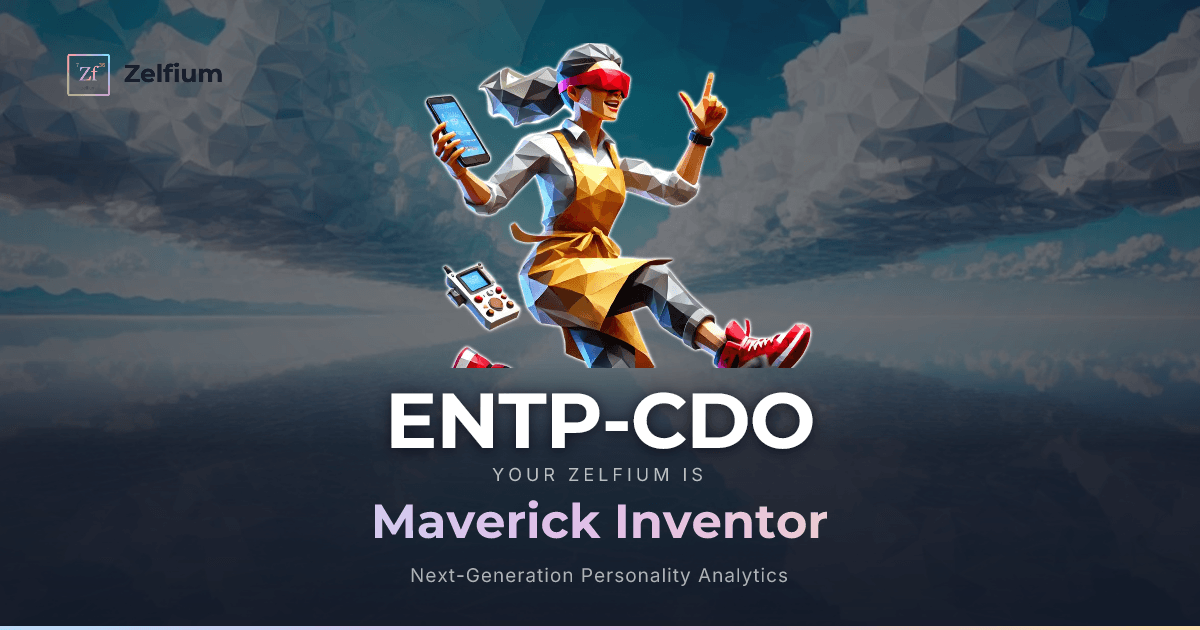
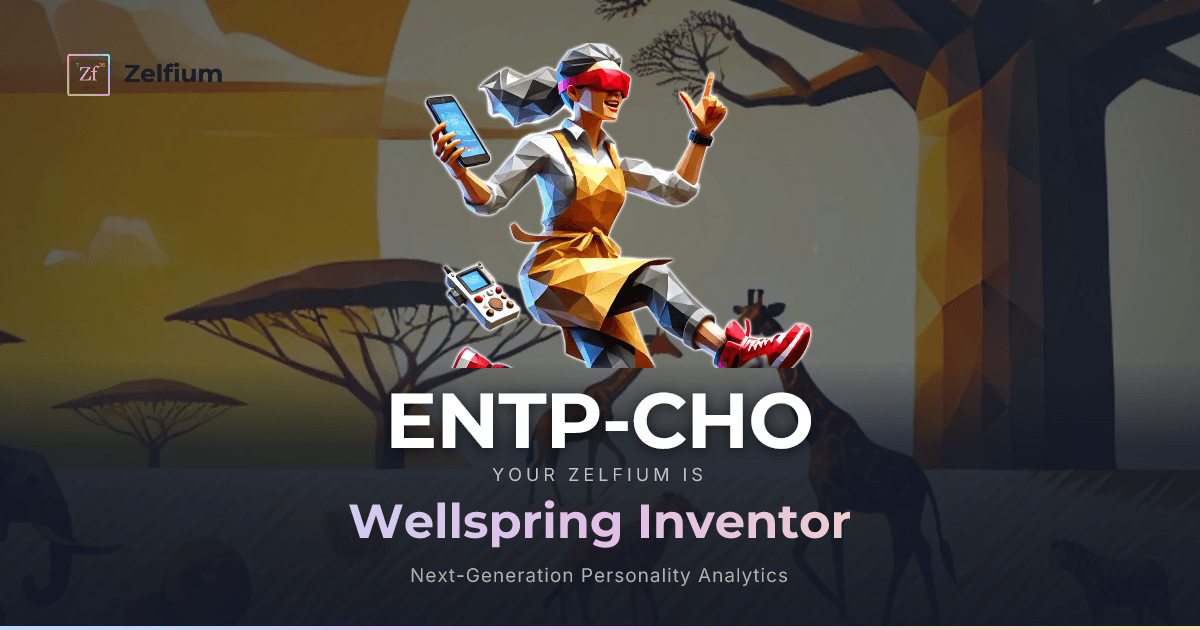
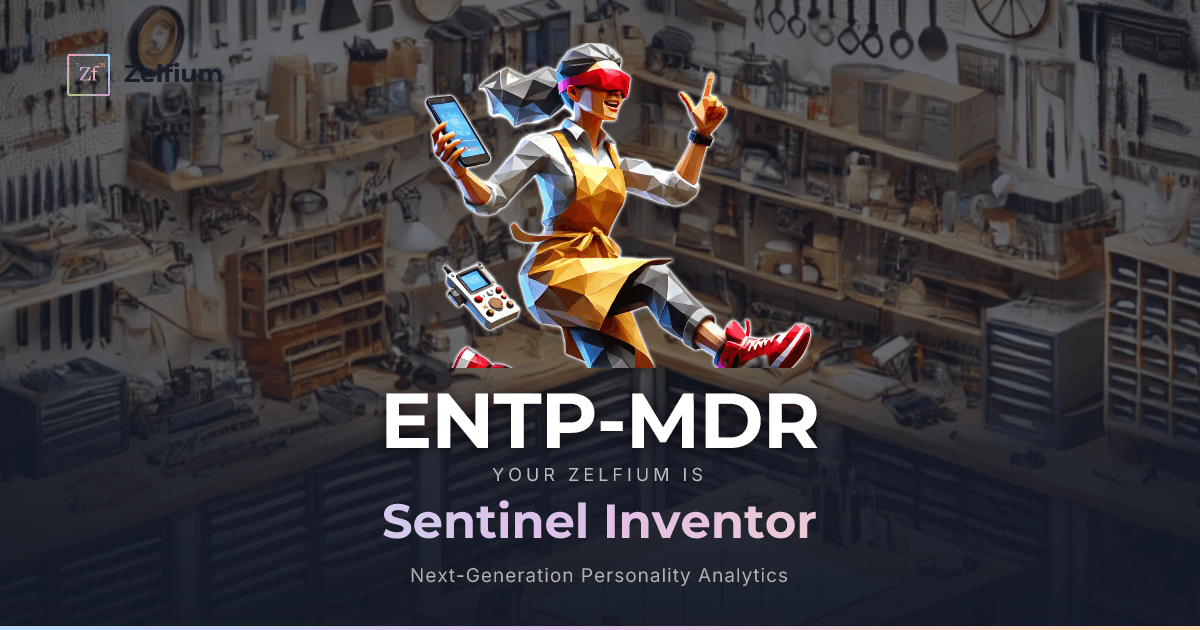
The Inventor
The ENTP is one of the most intellectually restless and inventive types in the Zelfium personality system. These four letters reveal the forces that shape how this type thinks, connects, and moves through the world. Extraverted (E) means drawing energy from engaging with people and ideas aloud — the ENTP mind comes alive in dialogue. OpeN (N) reflects a natural orientation toward patterns, possibilities, and the unseen connections between seemingly unrelated things. Thinking (T) describes the instinct to analyze, deconstruct, and seek logical coherence before accepting any claim at face value. Pioneering (P) captures a preference for flexibility, improvisation, and keeping options open rather than locking into a single plan.
Together, these dimensions create a person who thrives on intellectual sparring, who sees the world as a vast puzzle worth disassembling, and who is energized by the question "what if?" more than by the answer "this is how it's done." People with this pattern are drawn to novelty, debate, and the thrill of finding the flaw in an argument — not to tear things down, but because they genuinely believe that better ideas emerge when assumptions are tested. Their restless curiosity and quick-witted adaptability make them natural innovators, strategists, and catalysts for change.
The same 4-letter type produces 8 distinct profiles depending on the remaining 3 dimensions.
Extraverted / Introverted
The ENTP thinks by talking. Where some people need silence to process, this type needs conversation — not as performance, but as a genuine thinking tool. Ideas that feel foggy internally sharpen the moment they are articulated to someone else. ENTPs are drawn to people not because they fear being alone, but because interaction is where their intellect accelerates. A stranger at a conference, a friend over coffee, even a spirited disagreement with a colleague — each of these is an opportunity for the mind to generate something new.
This Extraversion gives the ENTP a remarkable ability to read a room and adapt their energy to it. They can shift from lighthearted banter to deep philosophical inquiry within the same conversation, and people often feel more intellectually alive after spending time with them. ENTPs naturally create environments where ideas flow freely and where others feel permission to think boldly.
The shadow side of this outward orientation is that ENTPs may sometimes talk through ideas before they are fully formed, which can come across as inconsistency. Extended periods of solitude may leave them feeling flat or disconnected — not from loneliness, but from the absence of the intellectual friction that fuels them. Learning to sit with one's own thoughts, undisturbed, can unlock a deeper layer of insight that conversation alone cannot reach.
OpeN / Sensory
The ENTP mind does not move in straight lines. It leaps. Someone with this combination sees connections between a marketing strategy and a medieval siege tactic, between a jazz improvisation and a software architecture. This is not whimsy — it is the way their cognition naturally operates, scanning for patterns and possibilities that others overlook. The ENTP is less interested in what is than in what could be, finding the realm of the hypothetical genuinely more compelling than the realm of the concrete.
This Openness makes the ENTP a prolific idea generator. Where others see a closed door, this type sees five alternative entrances and a window. They are the person who reframes a problem so fundamentally that the original question no longer applies. The ability to hold multiple abstract frameworks in mind simultaneously and spot where they intersect is one of the ENTP's most powerful intellectual gifts.
The challenge is landing. The ENTP mind generates possibilities faster than any human could pursue them, and the temptation to chase every shimmering thread is real. This can result in dozens of half-explored ideas and few completed projects — not because ability is lacking, but because the next insight always feels more urgent than the last. Growth comes from recognizing that the most brilliant idea in the world has zero impact until it is brought to completion. Choosing which possibilities to close, paradoxically, is what gives this openness its fullest expression.
Thinking / Feeling
The ENTP has a deep respect for logical consistency. When someone presents an argument, the first instinct is not to agree or empathize but to test it — to push on its foundations and see if the structure holds. This is not coldness; it is intellectual honesty. People with this type believe that the kindest thing one can do for an idea is to subject it to rigorous scrutiny, because only the ideas that survive that process deserve to be acted upon.
This Thinking orientation gives the ENTP exceptional clarity in complex situations. While others may be paralyzed by emotional noise or social pressure, this type can cut through to the essential variables and make decisions based on what the evidence actually supports. ENTPs are comfortable with uncomfortable truths, preferring to be accurately wrong rather than comfortably vague.
Where this dimension asks for attention is in recognizing that human beings are not logical systems. The colleague who needs encouragement more than critique, the friend who wants to be heard rather than solved — these are not failures of rationality but features of human connection. The ENTP's analytical power becomes truly formidable when deployed with awareness of its emotional impact. The goal is not to suppress logic but to widen the lens so that emotional data becomes part of the analysis rather than noise to be filtered out.
Judging / Pioneering
Structure feels like a cage to the ENTP — or at the very least, like an unnecessarily early commitment. This type prefers to keep options open, to respond to the situation as it unfolds rather than follow a predetermined script. This is not irresponsibility; it is a fundamentally different relationship with time and possibility. ENTPs trust their ability to improvise, and that trust is usually well-founded.
This Pioneering quality makes people with this pattern extraordinarily adaptable. When plans collapse, when the unexpected arrives, when everyone else is scrambling to reconcile reality with their spreadsheets, the ENTP is already three moves into a new approach. They thrive in ambiguity and often produce their best work under conditions that would paralyze a more structured mind. Deadlines, paradoxically, can be a friend — the pressure compresses expansive thinking into focused bursts of brilliance.
The tension lives in the gap between inspiration and execution. ENTPs are capable of extraordinary starts but may struggle with the unglamorous middle — the part where the novelty has worn off and what remains is persistent, incremental effort. Building personal scaffolding — systems that serve the creative process rather than constrain it — is the key to converting flashes of genius into lasting impact. The discipline this type needs is not the conventional kind; it is the discipline to finish what matters most.
When Extraversion and Openness converge, ideas cannot stay inside. The ENTP thinks socially and imaginatively at the same time, which means conversations are not idle chatter — they are live laboratories where hypotheses are generated, tested, and discarded at remarkable speed. This is the person who turns a casual lunch into an hour-long exploration of a problem no one else had noticed.
Add Thinking to this mix, and the torrent of possibilities gains structure. The ENTP does not simply generate ideas — they stress-test them in real time, arguing both sides with equal conviction, delighting in the intellectual gymnastics of finding the strongest version of a position they do not personally hold. This is where the Inventor archetype emerges: not from a desire to win, but from the belief that truth is forged in the heat of honest disagreement.
Pioneering completes the picture by keeping the whole system in motion. ENTPs resist premature closure because they intuitively understand that the best solution often appears after the obvious ones have been exhausted. This willingness to stay in the uncomfortable space of not-knowing, combined with analytical sharpness and social energy, makes the ENTP one of the most creative problem-solvers in any room.
The ENTP intellectual rhythm is unmistakable: rapid ideation followed by intense but selective focus, punctuated by periods where nothing seems to land. Thinking and Pioneering together create a mind that is simultaneously rigorous and restless — wanting to analyze deeply while also wanting to move on to the next fascinating question. This produces a distinctive pattern of diving deep into something, extracting its core insight, and then pivoting to the next domain before others have finished their first pass.
Extraversion and Pioneering amplify this rhythm. The ENTP is not content to think alone — there is a need to bounce ideas off others, to test logic against someone else's perspective, to feel the electric charge of a good debate. Routine drains this type. Predictability dulls them. They need intellectual variety the way others need stability, and the best environments are ones that offer a steady stream of novel challenges without demanding rigid adherence to process.
This rhythm is a strength when managed with self-awareness. The risk is scattering energy so widely that depth is sacrificed for breadth. The growth edge lies in learning to recognize which problems deserve sustained attention and granting permission to go deep — not because breadth is wrong, but because some of the most important contributions will come from the rare moments when the ENTP chooses to stay.
The combination of Extraversion and Thinking creates a distinctive interpersonal style: warm but direct, engaging but unafraid to challenge. The ENTP is the friend who will point out a fatal flaw in a business plan — not to discourage, but because they care enough to be honest. This type naturally adopts the role of devil's advocate, testing the ideas of those around them with the same rigor applied to their own.
This style is magnetic to people who crave intellectual honesty and exhausting to those who need emotional validation first. The ENTP's Openness means genuine curiosity about others' perspectives, but Thinking ensures that curiosity is analytical rather than sentimental. They listen to understand the structure of someone's argument, and their responses tend to be challenges rather than affirmations.
The deepest version of the ENTP's relational intelligence emerges when there is a willingness to match the approach to what the other person actually needs. Some conversations call for the sharpest analytical mode. Others call for simply being present, listening without solving, validating without evaluating. This does not require becoming someone else — it requires expanding the range of what natural warmth and curiosity can express. When an ENTP masters this, relationships gain a depth and trust that intellect alone cannot create.
The central tension of being an ENTP lives in the space between possibility and completion. Openness and Pioneering together generate an almost gravitational pull toward the new, the unexplored, the not-yet-tried. Meanwhile, the real world rewards follow-through, consistency, and the willingness to do unglamorous work after the initial spark has faded. The ENTP knows this intellectually — the Thinking dimension makes the logic of completion obvious — but knowing and doing are different things entirely.
There is a subtler tension too: between the love of debate and the need for genuine connection. Thinking and Extraversion together can create a pattern where every interaction becomes a sparring match, where the focus on the quality of the argument overshadows the vulnerability of the person making it. The sharpest growth comes not from dulling the analytical edge, but from learning when to set it aside — from discovering that some of the most important truths in life arrive not through logic but through trust, patience, and the willingness to be changed by another person.
The path forward is not about becoming more disciplined in the conventional sense. It is about building a life architecture that honors both the need for intellectual freedom and the desire to create something that endures. The ENTP who learns to finish — selectively, strategically, on their own terms — becomes not just brilliant but formidable.
The same 4-letter type produces 8 distinct profiles depending on the remaining 3 dimensions.
The ENTP portrait drawn here is the "pure form" — what emerges when every pole swings fully in this direction. In reality, each of your dimensions carries a different intensity, and at every intersection, a unique chemistry unfolds. Even a slight tilt in one dimension creates an entirely different internal dynamic — that is the resolution of Zelfium's 7-dimension model.
Zelfium measures each of 36 facets on a 6-point scale. The number of possible patterns:
6³⁶
possible patterns
vs all humans ever born
880 trillion ×
~117 billion humans have ever lived — repeat that 880 trillion times and you still can't fill every pattern
vs stars in the observable universe
~50,000 ×
~200 sextillion stars in the observable universe — still not enough
vs grains of sand on Earth
~1 billion ×
~7.5 quintillion grains of sand — multiply by a billion
vs current world population
~1.3 quintillion ×
Line up 1.3 quintillion copies of today's 8 billion people to fill every type
More than 50,000 times the number of every star in the observable universe. That is the resolution of your personality.
So don't fit yourself into this description too tightly. ENTP is a compass showing the direction your personality leans — not a box that defines everything you are. The pattern woven by your 36 facets is singular in this universe. To discover that one-of-a-kind blend — to find your own ENTP — take the assessment.